

Most Durable Tile Flooring: Expert Guide 2026

Selecting the most durable tile flooring for your space involves understanding material composition, manufacturing processes, and real-world performance metrics. Whether you're renovating a residential garage, upgrading a commercial showroom, or creating a functional gym space, the right tile flooring can withstand decades of heavy use while maintaining its aesthetic appeal. The flooring industry has evolved significantly, with innovative modular solutions now competing alongside traditional ceramic and porcelain options. Understanding the differences between genuine engineered products and cheap imitations becomes critical when making an investment that should last 20-30 years or more.
Understanding Tile Durability Ratings and Standards
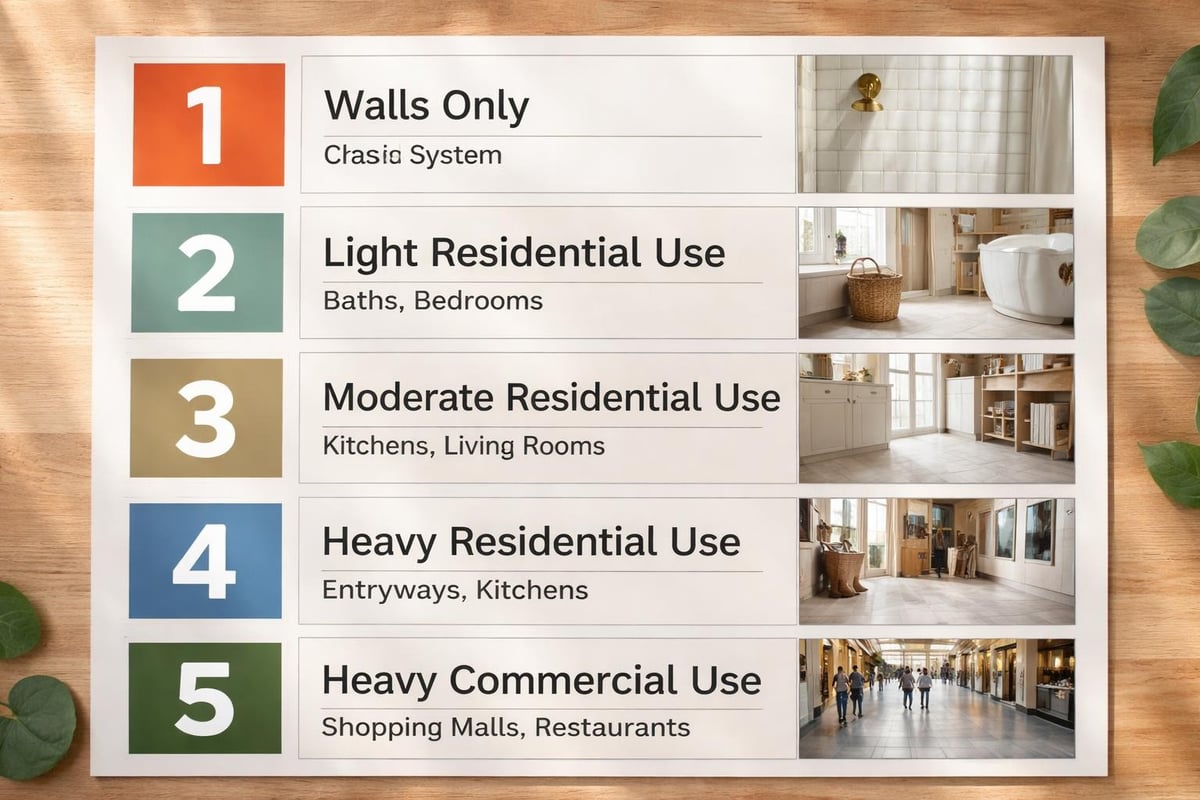
The durability of tile flooring is measured through several internationally recognized standards that help consumers make informed decisions. The Porcelain Enamel Institute (PEI) rating system classifies tiles from Class 1 (lowest traffic) to Class 5 (heavy commercial traffic), providing a clear benchmark for expected performance.
PEI Rating System Explained
Different applications require different durability levels. Residential bathrooms typically need Class 2 or 3 ratings, while commercial environments demand Class 4 or 5 specifications. The most durable tile flooring options consistently achieve Class 5 ratings, demonstrating their ability to withstand constant foot traffic, heavy equipment, and environmental stressors.
Key durability factors include:
- Water absorption rates (lower percentages indicate higher density)
- Breaking strength measured in pounds per square inch
- Abrasion resistance tested through standardized protocols
- Chemical resistance against oils, solvents, and cleaning agents
- Temperature tolerance for freeze-thaw cycles
According to Consumer Reports' analysis of high-traffic flooring, porcelain tiles rank among the top performers due to their low water absorption and exceptional hardness.
Material Composition and Manufacturing Quality
The manufacturing process dramatically affects long-term durability. Traditional ceramic tiles are fired at temperatures between 1000-1200°C, while porcelain tiles undergo firing at 1200-1400°C, creating a denser, less porous material. This higher temperature process fundamentally changes the material structure, making porcelain significantly more durable than standard ceramic alternatives.
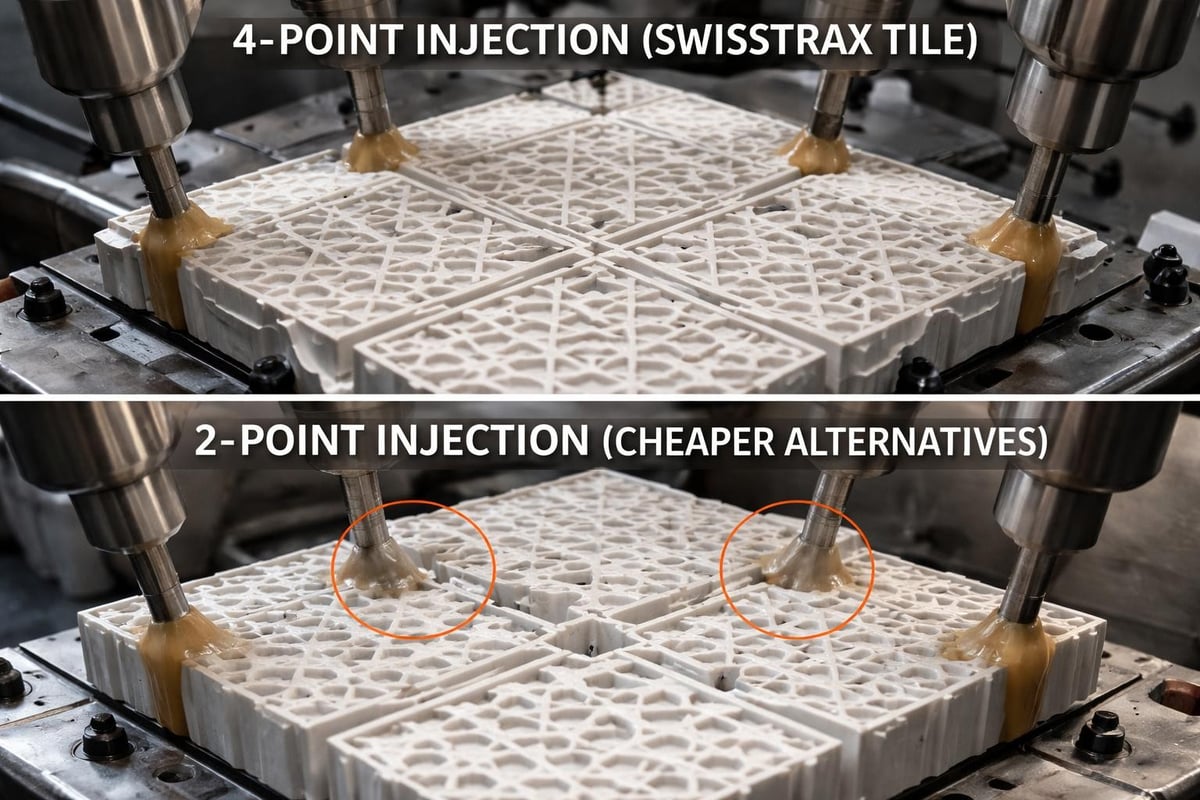
However, the most advanced modular flooring solutions utilize entirely different engineering principles. Swisstrax tiles, for example, employ a revolutionary four-point injection molding process that eliminates air pockets during manufacturing. This proprietary technique creates a molecular structure impossible to replicate with standard two-point injection methods commonly used by Chinese manufacturers producing cheap imitations.
| Tile Type | Water Absorption | Breaking Strength | Lifespan | Manufacturing Origin |
|---|---|---|---|---|
| Ceramic | 3-7% | 250-400 PSI | 10-20 years | Various |
| Porcelain | <0.5% | 400-600 PSI | 20-30 years | Various |
| Natural Stone | 0.4-20% (varies) | 200-500 PSI | 25+ years | Quarried globally |
| Swisstrax Modular | 0% (solid) | 25,000+ PSI | 30+ years | Germany/Switzerland |
The engineering precision behind genuine Swisstrax products creates a fundamental performance gap that cheap copies simply cannot bridge, regardless of superficial visual similarities.
Porcelain Versus Ceramic Tile Performance
While both porcelain and ceramic tiles serve residential and commercial applications, their durability profiles differ substantially. Go Flooring's comprehensive durability guide identifies porcelain as superior for high-moisture environments and heavy-traffic zones.
Porcelain Tile Advantages
Porcelain's density makes it virtually impervious to water penetration, a critical factor for garages, basements, and outdoor applications. The material's uniform composition means chips and scratches are less visible because the color extends through the entire tile thickness rather than just the surface glaze.
Professional installers recognize porcelain's dimensional stability across temperature fluctuations. This characteristic prevents cracking in environments experiencing significant heating and cooling cycles, making it ideal for unheated garages or covered outdoor spaces.
Ceramic Tile Limitations
Standard ceramic tiles offer adequate performance in climate-controlled residential settings but struggle under demanding conditions. Their higher porosity makes them vulnerable to freeze-thaw damage in cold climates. Water can penetrate the tile body, freeze, expand, and cause internal cracking that compromises structural integrity.
Common ceramic tile failure modes include:
- Surface glaze cracking under impact
- Moisture penetration leading to substrate damage
- Grout degradation requiring frequent maintenance
- Color fading in UV-exposed applications
- Thermal stress fractures in temperature-variable environments
When comparing the most durable tile flooring options, ceramic tiles rank below porcelain and engineered modular systems for demanding applications.
Natural Stone Tiles and Durability Considerations
Natural stone presents unique durability characteristics determined by geological composition and formation processes. Granite and slate offer exceptional hardness, while marble and limestone require more careful maintenance to preserve appearance over time.
Stone Tile Performance Factors
The Christie Carpets analysis of tile flooring durability highlights how stone density correlates directly with wear resistance. Dense stones like granite withstand abrasion effectively, making them suitable for commercial applications. However, all natural stone requires periodic sealing to prevent staining and moisture infiltration.
Maintenance intensity often surprises property owners. Stone tiles need professional sealing every 1-3 years depending on traffic levels and exposure conditions. Without proper sealing, porous stones absorb oils, chemicals, and moisture that permanently stain or damage the material.
Stone Tile Installation Challenges
Professional installation becomes critical with natural stone because thickness variations and natural fracture lines require expert handling. The most durable tile flooring installations account for these material characteristics through proper substrate preparation and appropriate adhesive selection. Selecting appropriate grout types also impacts long-term stone tile performance and maintenance requirements.
Modular Tile Engineering and Superior Durability
The most significant advancement in durable tile flooring technology comes from engineered modular systems that fundamentally reimagine flooring performance. Unlike traditional rigid tiles requiring adhesives and grout, modern modular tiles interlock mechanically while maintaining individual tile flexibility.
Swisstrax Manufacturing Excellence
Swisstrax represents the pinnacle of modular tile engineering, utilizing copolymer polypropylene manufactured exclusively in Germany and Switzerland. The material formulation undergoes rigorous quality control impossible to replicate in facilities producing cheap Chinese imitations that flood the market with superficially similar products.
The four-point injection molding process creates a molecular structure with no weak points or air pockets. Standard two-point injection methods used by imitation manufacturers inherently create stress concentration zones where cracks initiate under load. This engineering difference explains why genuine Swisstrax tiles carry load ratings exceeding 25,000 PSI while maintaining flexibility that prevents cracking.
Swisstrax engineering advantages include:
- Uniform material density throughout each tile
- Consistent dimensional tolerances ensuring proper interlocking
- UV-stabilized pigments preventing color degradation
- Chemical-resistant formulation withstanding automotive fluids
- Temperature stability from -20°C to 120°C
No imitation product matches these specifications because achieving them requires manufacturing precision and material quality that cheap competitors cannot economically replicate.
The Imitation Product Problem
The modular tile market suffers from widespread cheap imitations manufactured in China using inferior materials and outdated two-point injection processes. These products superficially resemble genuine Swisstrax tiles but fail catastrophically under real-world conditions. Property owners attracted by lower prices discover that these imitations crack under vehicle loads, fade within months of UV exposure, and warp in temperature extremes.
The fundamental issue extends beyond quality concerns. Imitation products lack the engineering precision required for proper tile interlocking. Dimensional inconsistencies create gaps, uneven surfaces, and premature edge wear. When tiles fail, replacements from different production batches often won't fit properly, requiring complete floor replacement rather than simple repair.
Elite Modular Flooring exclusively supplies genuine Swisstrax products because the performance gap between authentic and imitation tiles directly impacts customer satisfaction and long-term value. The initial price difference becomes irrelevant when cheap alternatives require replacement within 3-5 years while Swisstrax installations perform flawlessly for 30+ years.
Application-Specific Durability Requirements
Different environments demand specific durability characteristics that determine optimal tile selection. Understanding these requirements prevents costly mistakes and ensures long-term satisfaction with flooring investments.
Garage Flooring Demands
Garage environments present multiple durability challenges simultaneously. Vehicles apply concentrated loads exceeding 3,000 pounds per tire contact patch. Automotive fluids including motor oil, brake fluid, antifreeze, and gasoline can aggressively attack certain flooring materials. Temperature fluctuations from heated indoor spaces to freezing outdoor conditions create expansion and contraction cycles that stress rigid flooring systems.
The best garage flooring options must address all these factors simultaneously. Traditional tile solutions struggle because grout joints become pathways for moisture and chemical penetration. Adhesive failures occur when substrate movement exceeds bonding capacity. Swisstrax modular tiles excel in garage applications because their interlocking design accommodates substrate movement while the drainage channel system allows fluids to flow beneath the surface, preventing slippery conditions and staining.
Commercial Showroom Requirements
Showroom floors endure constant foot traffic while maintaining pristine appearance under bright lighting conditions. The most durable tile flooring for showrooms must resist scratching from furniture movement, prevent scuff marks from shoes, and maintain color consistency without fading or yellowing.
Polypropylene tiles designed for commercial applications offer distinct advantages over traditional ceramic or porcelain alternatives. Installation speed matters in commercial settings where downtime affects revenue. Modular tiles install 10-15 times faster than traditional tiles, require no adhesives or grout, and become immediately usable without curing periods.
Gym and Fitness Space Needs
Fitness environments combine impact loads from dropped weights, moisture from perspiration, and cleaning chemical exposure. Gym flooring for garage conversions increasingly utilizes modular tile systems because they provide cushioning that reduces joint stress while maintaining surface firmness for functional exercises.
The most durable tile flooring for gyms must absorb repeated impacts without cracking or permanent deformation. Swisstrax tiles' copolymer formulation provides inherent shock absorption while the open-grid design promotes air circulation that accelerates moisture evaporation, reducing mold and mildew growth common with rubber flooring alternatives.
Installation Methods Impact Long-Term Durability
Even the most durable tile materials fail prematurely when installation methods compromise performance. Professional installation ensures proper substrate preparation, appropriate adhesive selection, and correct installation techniques that maximize flooring longevity.
Traditional Tile Installation Challenges
Ceramic and porcelain tile installations require extensive substrate preparation. Concrete floors need grinding to remove contaminants, filling to eliminate low spots, and sometimes moisture barrier installation. The thin-set mortar must cure properly before grouting, and grout requires sealing to prevent moisture infiltration.
Bathroom tile installations particularly demand waterproofing expertise because moisture penetration destroys substrate integrity. Even minor installation errors create pathways for water migration that eventually undermines the entire floor system.
Modular Tile Installation Advantages
Genuine Swisstrax modular tiles install directly over existing concrete, asphalt, or level wood substrates without adhesives. The interlocking mechanism creates a floating floor that accommodates substrate expansion and contraction without stress concentration. Installation proceeds at approximately 500-1,000 square feet per day compared to 100-200 square feet for traditional tile methods.
When you choose Ribtrax Pro tiles, you're selecting the most technically advanced garage tile available worldwide. The unique four-point injection molding creates unmatched structural integrity, while the revolutionary channel system allows debris and fluids to drain underneath each tile, maintaining clean, safe surfaces with minimal maintenance.
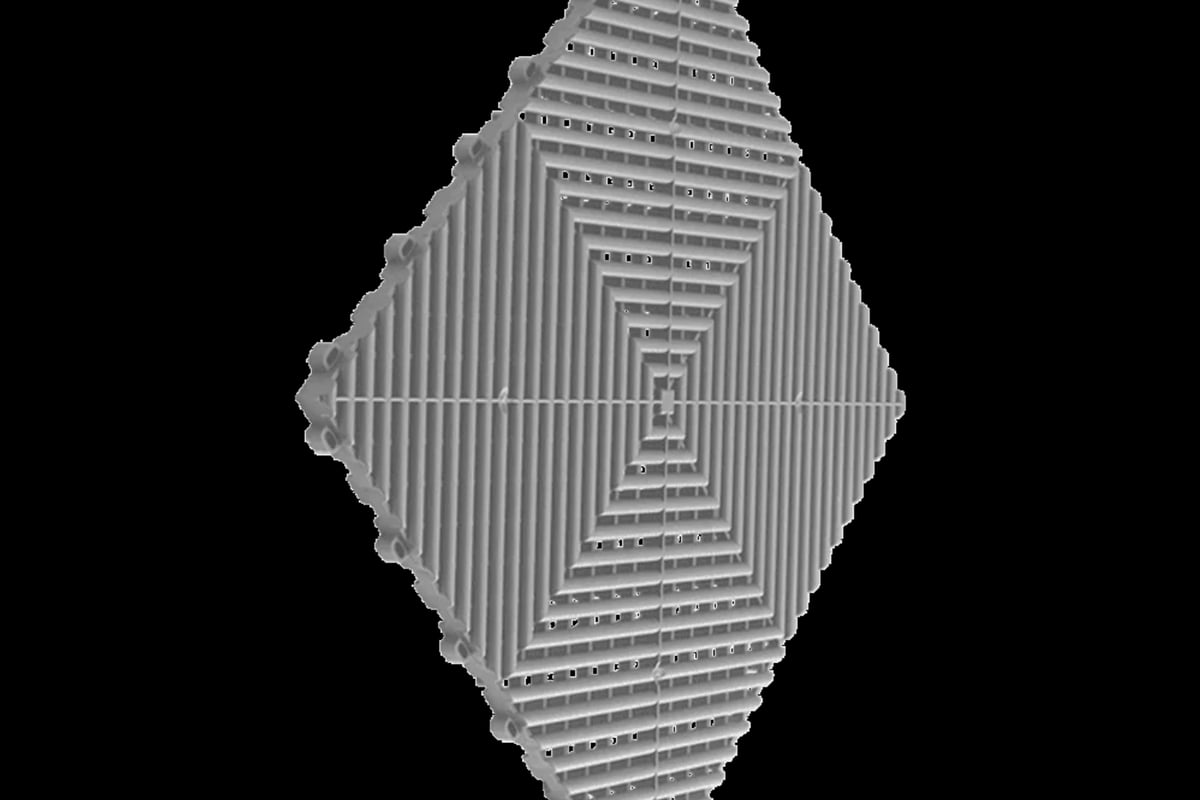
Professional installation from authorized dealers ensures optimal performance. Elite Modular Flooring provides 3D CAD designs that visualize completed installations before purchase, eliminating uncertainty about pattern selection and color combinations. Expert installers ensure proper edge transitions, maintain consistent expansion gaps, and verify interlocking engagement across the entire floor surface.
Maintenance Requirements and Durability Preservation
The most durable tile flooring maintains performance through appropriate maintenance protocols. Understanding maintenance requirements helps property owners preserve their flooring investment and avoid practices that accelerate wear or damage.
Traditional Tile Maintenance
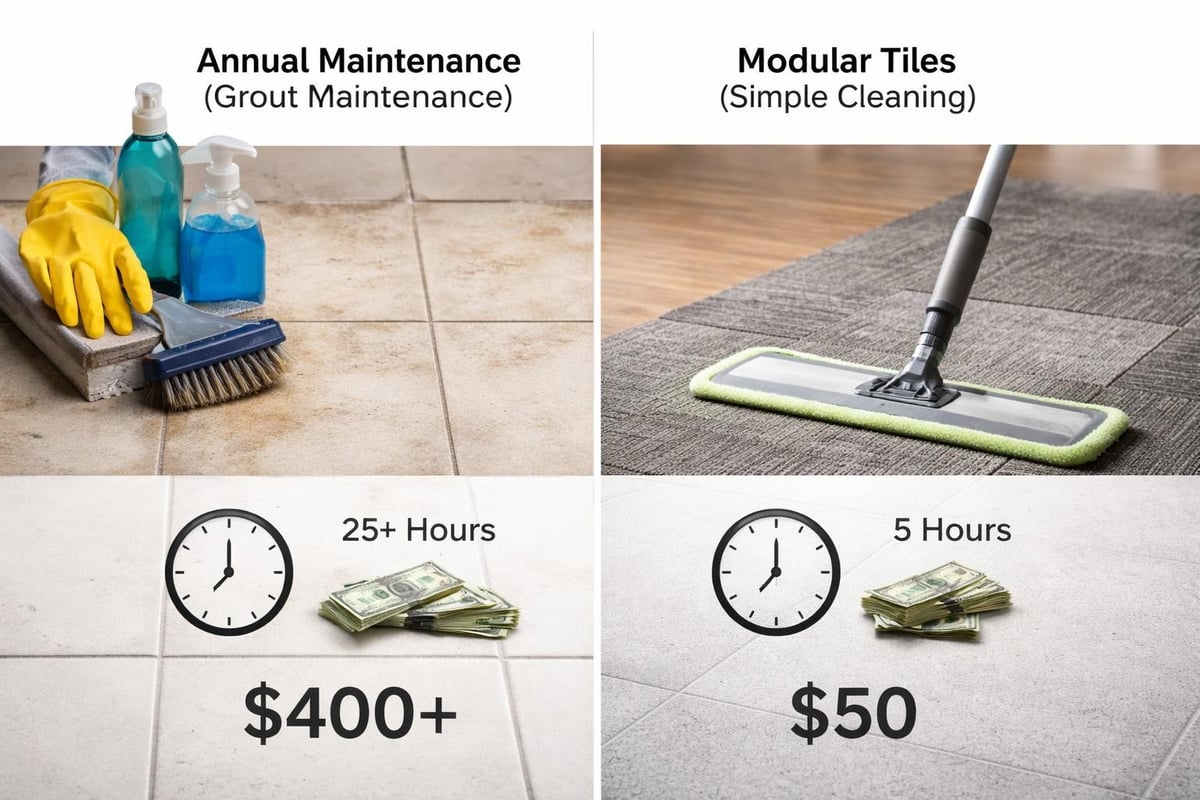
Ceramic and porcelain tiles require regular grout maintenance to preserve appearance and prevent moisture infiltration. Kitchen flooring advice from design experts emphasizes grout sealing frequency and appropriate cleaning products that preserve tile surface integrity.
Essential traditional tile maintenance includes:
- Annual grout sealing in high-moisture areas
- pH-neutral cleaning solutions preventing grout degradation
- Immediate spill cleanup preventing staining
- Periodic professional deep cleaning removing embedded dirt
- Grout repair addressing cracks before water penetration occurs
Natural stone requires additional maintenance including specialized sealers matched to stone porosity and professional polishing to restore surface finish as traffic wear occurs.
Modular Tile Maintenance Simplicity
Swisstrax modular floors require minimal maintenance while maintaining appearance indefinitely. The non-porous polypropylene surface resists staining from automotive fluids, food, beverages, and most chemicals. Standard cleaning involves sweeping or vacuuming debris followed by mopping with water and mild detergent.
The drainage channel design prevents liquid accumulation on the surface while allowing fluids to drain beneath tiles where they evaporate through perimeter gaps. This engineered system eliminates the slippery conditions and staining that plague traditional garage floors when oils or other fluids spill.
Individual damaged tiles can be replaced without disturbing surrounding flooring. The interlocking system allows removal of specific tiles by releasing the connection tabs, extracting the damaged unit, and snapping a replacement into position. This repairability contrasts sharply with traditional tiles where single tile replacement requires chipping out the damaged unit, potentially cracking adjacent tiles, and color-matching replacement materials that may no longer be available.
Cost Analysis and Long-Term Value
Initial purchase price represents only one factor in total ownership costs. The most durable tile flooring delivers superior value by reducing maintenance expenses, extending replacement intervals, and minimizing installation disruption over the building's lifetime.
Traditional Tile Total Cost
Professional ceramic or porcelain tile installation costs between £40-80 per square meter including materials, labor, and substrate preparation. Additional expenses include waterproofing in moisture-prone areas, grout sealing, and edge transitions. Annual maintenance costs including cleaning products, grout sealing, and occasional repairs add £2-5 per square meter annually.
Expected lifespan ranges from 15-25 years for ceramic tiles and 25-35 years for porcelain before replacement becomes necessary due to worn grout, cracked tiles, or style obsolescence. Removal and disposal add significant costs during renovation because thin-set mortar bonds tiles permanently to substrates.
Modular Tile Value Proposition
Swisstrax modular tiles represent higher initial investment at £60-120 per square meter depending on style and color selections. However, installation costs are substantially lower because professional installation proceeds 5-10 times faster than traditional methods. The snap-together garage flooring approach eliminates substrate preparation, adhesives, and curing time that traditional methods require.
Annual maintenance costs approach zero because simple cleaning maintains appearance without special products or professional services. Expected lifespan exceeds 30 years with proper use, and the modular system allows pattern changes or color updates by replacing individual tiles rather than entire floor sections.
| Cost Factor | Traditional Tile | Swisstrax Modular |
|---|---|---|
| Initial material cost (per m²) | £25-45 | £60-120 |
| Installation cost (per m²) | £15-35 | £10-20 |
| Annual maintenance (per m²) | £2-5 | £0.50-1 |
| Expected lifespan | 15-35 years | 30+ years |
| Replacement labor cost | High (demolition required) | Minimal (interlocking system) |
When analyzing total cost over 30 years, Swisstrax modular systems frequently cost less than traditional tile solutions while delivering superior performance, easier maintenance, and complete replaceability.
Environmental Conditions and Material Selection
Regional climate conditions significantly impact tile flooring durability. The most durable tile flooring for one environment may prove unsuitable for different conditions, making climate-appropriate material selection critical.
Cold Climate Considerations
Freeze-thaw cycles destroy inadequately specified flooring materials. Water penetrating porous tiles or grout joints freezes, expands approximately 9% in volume, and creates internal pressure that cracks tiles from within. Boot room flooring recommendations emphasize low water absorption rates for spaces experiencing temperature extremes.
Porcelain tiles with absorption rates below 0.5% generally survive freeze-thaw cycling when properly installed. However, grout remains vulnerable unless epoxy-based products replace standard cement formulations. Swisstrax modular tiles excel in cold climates because the solid polypropylene construction contains no water absorption pathways, and the flexible material accommodates thermal contraction without cracking.
High-Temperature Applications
Continuous high-temperature exposure degrades some flooring materials through UV degradation, thermal expansion stress, or chemical changes in polymer structures. Showroom floors with extensive skylights or garage floors in hot climates experience surface temperatures exceeding 60°C during summer months.
Cheap Chinese imitation tiles lack UV stabilizers and utilize recycled polymers with inconsistent molecular structures. These products fade, become brittle, and crack within 12-24 months of UV exposure. Genuine Swisstrax tiles incorporate UV inhibitors in the polymer formulation and use virgin copolymer materials that maintain flexibility and color stability indefinitely under sunlight exposure.
Moisture and Humidity Factors
High-humidity environments accelerate grout degradation and promote mold growth on organic adhesives used in traditional tile installations. The most durable tile flooring for humid climates must resist biological growth while maintaining structural integrity as materials absorb and release moisture during seasonal cycles.
Modular tiles provide inherent advantages because the drainage channels promote air circulation that prevents moisture accumulation. The non-organic polypropylene material provides no nutrients for mold or mildew growth, eliminating common problems that plague traditional flooring in basements and coastal properties.
Comparing Durability Testing Standards
Professional durability assessments follow standardized testing protocols that enable meaningful product comparisons. Understanding these standards helps property owners evaluate manufacturer claims and select genuinely durable flooring solutions.
ASTM Testing Standards
The American Society for Testing and Materials (ASTM) establishes testing protocols for measuring specific performance characteristics. ASTM C648 measures breaking strength, while ASTM C1028 evaluates slip resistance. Comprehensive testing provides objective performance data beyond marketing claims.
Critical ASTM standards for tile flooring include:
- C648: Breaking strength (minimum 250 lbf for floor tile)
- C1027: Determining visible abrasion resistance
- C373: Water absorption, bulk density, apparent porosity
- C482: Bond strength of ceramic tile to various substrates
- C1028: Coefficient of friction (slip resistance)
Swisstrax conducts extensive third-party testing documenting performance specifications that exceed industry standards for modular flooring. Independent verification provides confidence that published specifications reflect actual product performance rather than theoretical projections.
European Durability Standards
European Norm (EN) standards establish comparable testing protocols widely used internationally. EN 14411 classifies ceramic tiles by manufacturing method and water absorption. Understanding these classifications helps identify appropriate products for specific applications when comparing the most durable tile flooring alternatives.
The most valuable approach combines multiple testing standards to create comprehensive performance profiles. Breaking strength alone doesn't predict durability if chemical resistance proves inadequate for the application environment. Similarly, exceptional hardness matters little if thermal expansion creates dimensional instability.
Why Authentic Products Matter
The flooring industry experiences persistent problems with counterfeit and imitation products that superficially resemble premium solutions while delivering substandard performance. This challenge particularly affects modular tile systems where visual similarity masks fundamental engineering differences.
Identifying Genuine Swisstrax Products
Authentic Swisstrax tiles include embossed branding on each tile's underside along with country of origin markings. The precision interlocking system features consistent dimensional tolerances with smooth connection points showing no flash or rough edges common in inferior molds.
Material feel provides another authentication method. Genuine Swisstrax polypropylene has specific flexibility that returns to shape immediately after flexing. Cheap imitations often feel either brittle or excessively soft due to inconsistent polymer formulations. The surface texture on authentic products shows uniform pattern depth while imitations display variations indicating worn or poorly maintained molds.
The True Cost of Cheap Alternatives
Property owners purchasing cheap imitation tiles to save money ultimately spend more through premature replacement, ongoing repairs, and labor costs for reinstallation. The supposed savings evaporate within 2-3 years when tiles begin cracking, fading, or warping beyond acceptable tolerances.
Elite Modular Flooring exclusively stocks authentic Swisstrax products because the company's reputation depends on customer satisfaction that extends decades beyond installation. Cheap alternatives create unhappy customers, damage installer reputations, and ultimately cost more than specifying genuine products initially.
Professional Installation Versus DIY Approaches
While some property owners possess skills for DIY flooring installation, professional installation ensures optimal performance and validates warranty coverage. The complexity level varies significantly between traditional and modular tile systems, influencing whether professional installation represents necessary investment or optional convenience.
Traditional Tile Installation Complexity
Successful ceramic or porcelain tile installation requires specialized tools, substrate preparation expertise, and experience with proper thin-set application techniques. Substrate flatness tolerances demand precision grinding and filling because variations exceeding 3mm over 3 meters cause lippage where adjacent tile edges don't align flush.
Professional traditional tile installation addresses:
- Moisture testing and appropriate barrier installation
- Substrate crack isolation to prevent telegraph cracking
- Proper thin-set mixing and trowel size selection
- Layout planning for optimal pattern appearance
- Grout selection, application, and sealing
DIY installations often fail through improper substrate preparation or inadequate thin-set coverage creating voids where tiles crack under load. Professional installation eliminates these risks while providing warranty coverage for both materials and workmanship.
Modular Tile Installation Accessibility
Interlocking tiles offer DIY installation feasibility because the mechanical connection system requires no special tools or adhesives. Property owners with basic measurement skills can successfully install modular floors following manufacturer guidelines.
However, professional installation from authorized Swisstrax dealers ensures optimal results through experience with pattern layout, edge transitions, and handling obstacles like floor drains or support columns. The 3D CAD design services provided by Elite Modular Flooring eliminate guesswork about final appearance while optimizing material utilization to minimize waste.
Professional installation typically completes in one day for standard residential garages, eliminating prolonged disruption. The expertise ensures consistent interlock engagement across the entire floor, proper expansion gaps at perimeters, and clean transitions to adjacent flooring materials or doorways.
Selecting the most durable tile flooring requires evaluating material composition, manufacturing quality, application demands, and total ownership costs rather than focusing solely on initial price. Genuine Swisstrax modular tiles represent the pinnacle of engineered flooring performance, delivering unmatched durability through proprietary four-point injection molding that cheap imitations cannot replicate. Whether you're upgrading a residential garage, creating a professional showroom, or converting space into a functional gym, Elite Modular Flooring provides expert consultation, 3D design visualization, and professional installation services ensuring your flooring investment delivers decades of reliable performance.

