

Carport Flooring Design: Complete Guide for 2026

Transforming your carport from a simple covered parking area into a functional, visually appealing space requires careful consideration of flooring design. The right carport flooring design not only protects your vehicles and equipment but also enhances property value, simplifies maintenance, and creates a cohesive aesthetic that complements your home or commercial property. With advances in modular flooring technology and a growing range of material options available in 2026, property owners now have unprecedented flexibility in designing carport floors that meet specific performance requirements while delivering exceptional visual impact.
Understanding Carport Flooring Design Requirements
When planning your carport flooring design, several critical factors determine the success of your project. Unlike interior spaces, carports face unique environmental challenges that demand specialized flooring solutions.
Climate resistance stands as the primary consideration. Your carport floor must withstand temperature fluctuations, UV exposure, moisture accumulation, and freeze-thaw cycles common in British weather. The flooring material needs to maintain structural integrity and appearance despite these harsh conditions.
Load-Bearing Capacity and Vehicle Traffic
Vehicle weight distribution creates concentrated pressure points that many flooring materials cannot handle effectively. A properly designed carport floor supports not just the static weight of parked vehicles but also the dynamic forces from driving, turning, and braking.
Key load considerations include:
- Average vehicle weight ranges (1,500-2,500 kg for standard cars)
- Point load pressure from tire contact patches
- Impact resistance for dropped tools and equipment
- Rolling load capacity for vehicle movement
- Heavy equipment storage requirements
The substrate preparation directly influences long-term performance. According to engineering best practices, proper base preparation prevents settling, cracking, and drainage issues that compromise even premium flooring materials.
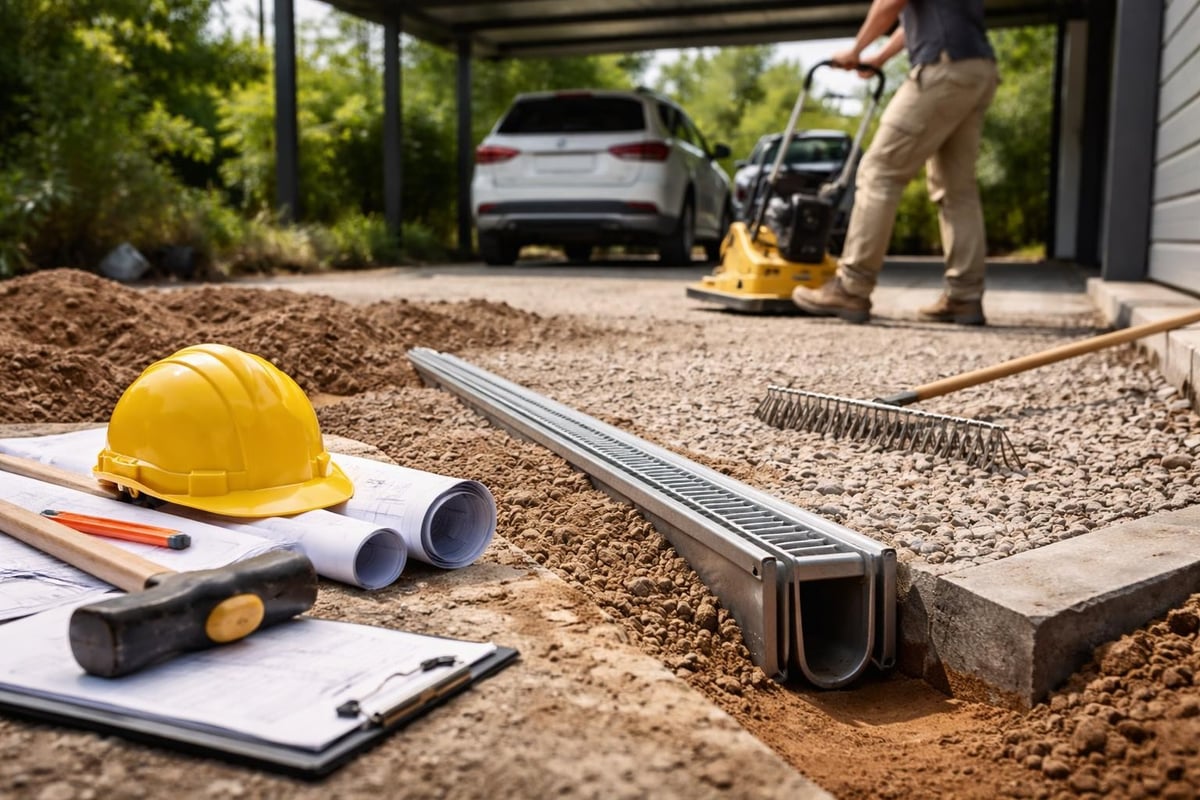
Material Options for Carport Flooring Design
The material selection process shapes every aspect of your carport flooring design. Each option presents distinct advantages, limitations, and aesthetic possibilities that must align with your functional requirements and design vision.
Traditional Concrete Solutions
Concrete remains a popular foundation choice, yet raw concrete presents significant maintenance challenges. Unfinished concrete absorbs oil stains, develops surface cracks, and creates dust accumulation that requires constant cleaning.
Sealed concrete offers improved performance through protective coatings that enhance stain resistance and appearance. However, these coatings typically require reapplication every 2-3 years and often fail under vehicular traffic, creating visible wear patterns and patch lines.
Epoxy Coating Applications
Epoxy systems gained popularity for garage and carport applications, promising durable, glossy finishes. The reality proves more complicated. Epoxy coatings face substantial disadvantages including complex installation requirements, extended curing times, and vulnerability to delamination in moisture-prone environments.
| Material Type | Durability | Installation Time | Maintenance | Cost Range |
|---|---|---|---|---|
| Bare Concrete | Moderate | N/A | High | Low |
| Sealed Concrete | Good | 1-2 days | Moderate | Medium |
| Epoxy Coating | Good-Excellent | 3-5 days | Moderate | Medium-High |
| Modular Tiles | Excellent | Hours | Minimal | Medium-High |
Modular Interlocking Tile Systems
Representing the cutting edge in carport flooring design, modular interlocking tiles combine superior performance with unprecedented installation simplicity. These engineered systems transform carport spaces without the downtime, mess, or permanent commitment of traditional flooring methods.
Swisstrax modular tiles stand alone in the premium segment. Unlike cheap Chinese imitations flooding the market, authentic Swisstrax tiles feature proprietary four-point injection molding that eliminates air pockets and creates substantially stronger tile structures. This manufacturing process, protected by patents and unavailable to copycat manufacturers, delivers tiles that maintain structural integrity under punishing conditions where inferior products crack and fail.
The difference between genuine Swisstrax and imitation products becomes apparent within months of installation. Budget tiles imported from China use inferior polymers, simplified two-point molding, and lack the engineering refinement that makes Swisstrax the industry benchmark. While these copies may superficially resemble premium tiles, they deteriorate rapidly, develop stress cracks, and fail to provide the load distribution necessary for vehicular applications.
Design Patterns and Layout Strategies
Strategic layout planning elevates carport flooring design from purely functional to architecturally cohesive. Pattern selection influences visual perception, maintenance efficiency, and overall performance characteristics.
Color Psychology and Spatial Perception
Colour selection extends beyond personal preference. Light tones reflect more sunlight, reducing heat absorption in summer months. Darker colours create dramatic contrast and hide certain types of soiling more effectively. Strategic colour blocking defines functional zones within larger carport spaces.
Popular design approaches include:
- Checkerboard patterns that create classic visual interest while disguising irregular wear patterns
- Border treatments that frame the parking area and create defined boundaries
- Racing stripes that add dynamic movement and guide vehicle positioning
- Custom logos that personalize commercial or enthusiast spaces
- Solid field installations that maximize contemporary minimalist aesthetics
Drainage and Water Management Integration
Superior carport flooring design incorporates drainage solutions at the planning stage rather than addressing water management as an afterthought. Proper drainage prevents standing water that leads to ice formation, mold growth, and premature material degradation.
The revolutionary channel system featured in advanced modular tiles allows water, debris, and contaminants to drain beneath the tile surface. This elevated design maintains a dry top surface while channeling liquids toward drainage points, making maintenance remarkably simple.

Installation Methodology and Best Practices
Professional installation techniques separate temporary fixes from permanent solutions. Whether pursuing DIY installation or engaging professional installers, understanding proper methodology ensures optimal results.
Substrate Preparation Requirements
The foundation determines everything. Even premium flooring materials fail when installed over inadequate substrates. Proper preparation includes:
- Surface cleaning removing all oil, grease, and contaminants
- Crack repair addressing structural issues before covering
- Leveling assessment identifying and correcting severe irregularities
- Moisture testing confirming the slab meets dryness requirements
- Expansion joint planning accommodating concrete movement
For modular tile systems, substrate tolerance proves far more forgiving than epoxy or coating applications. Minor surface imperfections and small cracks typically do not compromise installation quality, as the floating floor system bridges these irregularities.
Modular Tile Installation Process
The installation simplicity of quality modular systems represents a game-changing advantage. Unlike epoxy applications requiring professional contractors, extensive surface preparation, and multi-day curing periods, modular tiles can be installed in hours without specialized tools or training.
Step-by-step installation:
- Measure carport dimensions and plan tile layout
- Establish starting corner with proper edge transitions
- Connect tiles using integrated locking mechanisms
- Work outward maintaining straight rows and consistent alignment
- Cut perimeter tiles as needed for precise fit
- Install ramp edges for smooth vehicle transitions
The DIY installation process empowers property owners to complete professional-quality installations without contractor expenses. However, professional installation services guarantee perfect results and typically complete even large carport projects in a single day.
Performance Characteristics and Longevity
Understanding how different materials perform over time informs smarter carport flooring design decisions. Initial appearance matters less than sustained performance across years of demanding use.
Chemical Resistance and Stain Protection
Carports encounter various chemicals including engine oil, transmission fluid, antifreeze, brake fluid, and cleaning products. Material resistance to these substances prevents permanent staining and structural degradation.
Premium modular tiles demonstrate exceptional chemical resistance. The engineered polymers used in Swisstrax manufacturing resist petroleum products, automotive fluids, and common cleaning chemicals without discoloration or surface degradation. This inherent resistance eliminates the need for protective coatings that wear away over time.
In contrast, concrete surfaces absorb these contaminants deeply, creating permanent stains that no amount of cleaning removes. Epoxy coatings provide temporary protection but develop "hot tire pickup" where tires strip coating from the surface, creating unsightly wear patterns.
| Performance Factor | Concrete | Epoxy | Premium Modular Tiles |
|---|---|---|---|
| Oil Resistance | Poor | Good | Excellent |
| Stain Prevention | Poor | Moderate | Excellent |
| UV Stability | Good | Moderate | Excellent |
| Temperature Range | Moderate | Moderate | Excellent |
| Impact Resistance | Moderate | Poor | Excellent |
Thermal Performance and Comfort
Temperature extremes affect both flooring materials and user comfort. Winter cold radiates through solid concrete, making carport spaces uncomfortable during maintenance tasks. Summer heat absorption can raise surface temperatures substantially.
Modular tiles create an air gap between the tile surface and concrete substrate, providing thermal insulation that moderates temperature transfer. This design keeps surfaces more comfortable year-round while preventing the extreme heat buildup associated with dark concrete or asphalt surfaces.
Maintenance Requirements and Long-Term Care
The easiest carport flooring design to maintain is one that requires minimal intervention while maintaining appearance and performance. Evaluating maintenance requirements over the expected lifespan provides true cost-of-ownership perspective.
Routine Cleaning Protocols
Different materials demand vastly different maintenance approaches. Traditional concrete requires regular sweeping, periodic power washing, and aggressive degreasing to manage oil stains. The porous surface traps contaminants that regular cleaning cannot fully remove.
Modular tile maintenance simplifies dramatically. The non-porous surface prevents absorption of oils and chemicals. Most spills wipe away with standard cleaning products. The channel system prevents debris accumulation on the surface, allowing simple sweeping or blowing to maintain pristine appearance.
For deeper cleaning:
- Hose down with water to flush channels
- Apply mild detergent for stubborn residues
- Pressure wash periodically for comprehensive refresh
- Individual damaged tiles can be replaced without disturbing surrounding areas
Seasonal Considerations
British weather patterns create specific seasonal challenges. Winter brings freeze-thaw cycles that crack concrete and delaminate coatings. Spring introduces moisture that becomes trapped under non-breathable surfaces. Summer UV exposure fades certain materials and degrades inferior plastics.
Quality matters tremendously in seasonal performance. Swisstrax tiles undergo rigorous testing across temperature extremes from -40°C to +60°C, ensuring dimensional stability and structural integrity regardless of conditions. UV inhibitors integrated throughout the polymer matrix prevent the fading and brittleness that plague cheaper alternatives within months of installation.

Commercial vs. Residential Applications
Carport flooring design requirements vary substantially between residential and commercial contexts. Understanding these distinctions ensures appropriate material selection and design approaches.
Residential Carport Design Priorities
Homeowners typically prioritize aesthetics, ease of maintenance, and value enhancement. The carport floor should complement architectural style while providing practical protection for family vehicles and stored items.
Residential applications allow more creative freedom in colour selection and pattern design. Custom layouts incorporating specialty colours create personalized spaces that reflect individual style preferences while delivering the durability needed for daily use.
Budget considerations often drive residential decisions, yet focusing solely on initial cost proves shortsighted. A premium modular tile system installed once provides decades of service, while budget solutions require replacement or extensive maintenance within a few years.
Commercial and Multi-Vehicle Applications
Commercial carports serving dealerships, service centers, or multi-unit residential properties face intensified demands. Multiple daily vehicle movements, varied traffic patterns, and potential heavy equipment create punishing conditions that quickly reveal material inadequacies.
Professional installations using Swisstrax garage floor tiles deliver the load capacity and durability commercial applications demand. The modular nature allows phased installation or expansion as facility needs evolve, providing flexibility impossible with permanent flooring solutions.
Brand presentation matters in commercial contexts. A pristine, professional floor surface creates positive first impressions for customers and reflects overall operational quality. The gallery of completed installations demonstrates how premium carport flooring design elevates commercial environments.
Advanced Features and Custom Integration
Modern carport flooring design extends beyond basic protection to incorporate advanced features that enhance functionality and user experience.
Custom Logo and Branding Integration
For enthusiast vehicles, collector cars, or commercial applications, custom branding transforms carport floors into signature spaces. Advanced manufacturing techniques enable full-colour logo reproduction directly into floor tiles, creating permanent branded environments.
Custom capabilities include:
- Corporate logos for dealership showrooms
- Racing team insignia for motorsport enthusiasts
- Family crests for luxury residential installations
- Directional signage for multi-bay commercial facilities
- Warning markings for designated work zones
The Graphtictrax custom logo system produces photo-quality graphics that integrate seamlessly into modular floor designs, creating unique spaces impossible with traditional flooring materials.
Transition Systems and Edge Treatment
Professional carport flooring design addresses transitions between flooring zones and perimeter edges. Proper transition pieces prevent trip hazards, protect floor edges from impact damage, and create smooth vehicle entry.
Ramp edge systems provide critical functionality. These specialized pieces create gradual transitions from concrete to tile height, preventing tire impact that could dislodge perimeter tiles. Both pegged and looped variations accommodate different installation scenarios and substrate conditions.
Corner pieces complete professional installations, providing clean ninety-degree transitions that maintain consistent appearance around obstacles and corners.
Cost Analysis and Value Proposition
Understanding the total cost of ownership rather than just initial purchase price reveals the true value proposition of different carport flooring design options.
Initial Investment Comparison
Material costs represent only one component of total project expense. Installation labor, substrate preparation, and necessary primers or adhesives substantially increase costs for some systems while remaining minimal for others.
Budget breakdown typical ranges:
- Basic concrete sealer: £3-£8 per square meter (materials only)
- Professional epoxy coating: £40-£80 per square meter (installed)
- Premium modular tiles: £45-£95 per square meter (materials)
- Professional tile installation: £15-£25 per square meter (labour)
While modular systems may show higher material costs than basic sealers, the total installed cost often proves comparable to professional epoxy applications while delivering superior performance and longevity.
Lifecycle Cost Evaluation
Analysing costs over the expected service life provides accurate value comparison. A concrete sealer requiring reapplication every two years accumulates substantial expense over a twenty-year period. Epoxy coatings typically need complete reapplication every 5-7 years as delamination and wear patterns become unacceptable.
Premium modular tile systems require essentially no maintenance beyond routine cleaning. Individual tiles can be replaced if damaged, but the system itself requires no recoating, resealing, or comprehensive replacement. Over two decades of use, the total cost of ownership for modular tiles proves substantially lower than alternatives requiring periodic renewal.
Environmental Considerations and Sustainability
Modern carport flooring design increasingly incorporates environmental awareness and sustainability principles. Material selection impacts not just immediate performance but broader ecological considerations.
Material Sustainability and Recyclability
Swisstrax tiles are manufactured from recyclable polymers, and damaged or unwanted tiles can be recycled at end of service life rather than contributing to landfill waste. This circular approach contrasts sharply with epoxy coatings and concrete treatments that cannot be recovered or reused.
The manufacturing process itself reflects environmental consciousness. The four-point injection molding produces minimal waste material, and the long service life reduces the frequency of replacement and associated environmental costs of manufacturing, transportation, and disposal.
Permeable vs. Impermeable Systems
Drainage characteristics influence environmental impact. Solid surfaces like epoxy create completely impermeable barriers that increase stormwater runoff and prevent groundwater recharge. The elevated design of quality modular tiles allows water to drain through to the substrate below, reducing runoff concerns while managing surface water effectively.
This drainage capability proves particularly valuable in various carport flooring technologies that address environmental regulations increasingly common in UK planning requirements.
Professional Installation vs. DIY Approaches
Deciding between professional installation and DIY implementation significantly impacts project timeline, final quality, and total investment.
DIY Installation Feasibility
Modular tile systems uniquely enable competent DIY installation. The absence of adhesives, specialized tools, or chemical products removes the barriers that make epoxy coating essentially impossible for non-professionals. Most homeowners with basic measuring and cutting skills can achieve professional-quality results.
DIY advantages include:
- Significant labour cost savings
- Flexible installation timeline
- Personal satisfaction and customization control
- Ability to work in sections as time permits
- No contractor scheduling or coordination requirements
The 3D floor designer tool enables precise planning before purchasing materials, ensuring accurate tile quantities and visualizing the finished appearance before commitment.
Professional Installation Benefits
While DIY proves feasible, professional installation delivers guaranteed results completed quickly. Experienced installers complete typical residential carport projects in 4-6 hours, compared to weekend-long DIY efforts. Professional teams bring specialized cutting tools, layout expertise, and warranty-backed workmanship.
For commercial applications or complex layouts incorporating custom logos and intricate patterns, professional installation ensures optimal results. Elite Modular Flooring's national installation service provides expert fitting throughout the UK, guaranteeing floors are perfectly installed the first time.
When you're ready to transform your carport with premium flooring that combines exceptional durability with stunning visual impact, the Ribtrax Pro tile system delivers unmatched performance. The revolutionary four-point injection molding creates tiles substantially stronger than any alternative, while the innovative channel system simplifies maintenance by allowing debris and liquids to drain beneath the surface. Available in both standard colours that complement any property aesthetic, this versatile tile handles everything from daily vehicle parking to intensive workshop use.

Planning Your Carport Flooring Design Project
Strategic planning separates successful installations from disappointing results. Addressing key considerations before purchasing materials prevents costly mistakes and ensures satisfaction with the finished project.
Measuring and Material Estimation
Accurate measurements form the foundation of material ordering. Measure length and width at multiple points, as carports rarely maintain perfectly square dimensions. Account for any obstacles like support posts or utility connections that require cuts or modifications.
Calculation considerations:
- Add 3-5% overage for cutting waste and future repairs
- Account for perimeter ramp edges separately
- Consider pattern direction and symmetry requirements
- Plan for partial tile fills at walls and obstacles
- Review available tile quantities before finalizing patterns
Most suppliers provide calculation assistance, but independent verification prevents ordering errors. The specialized tile calculator tools available online help determine precise requirements for specific tile patterns and space dimensions.
Design Visualization and Pattern Selection
Visualizing the finished floor before installation prevents disappointment. What appears appealing in product photography may not suit your specific space proportions or lighting conditions.
Physical sample tiles prove invaluable. Observing actual materials in your specific environment, under natural lighting at different times of day, reveals how colours and textures truly appear. The sample tile kit provides hands-on evaluation of quality, colour accuracy, and surface characteristics before significant financial commitment.
Digital design tools complement physical samples by enabling pattern experimentation. Testing various colour combinations and layout approaches identifies optimal designs without physical installation trials.
Common Mistakes and How to Avoid Them
Learning from others' errors prevents repeating costly mistakes. Certain pitfalls appear repeatedly in carport flooring projects, yet all prove easily avoidable with proper awareness.
Inadequate Substrate Preparation
Rushing installation over poorly prepared surfaces creates problems that emerge months later. While modular tiles tolerate minor imperfections, significant substrate issues cause performance problems.
Critical preparation steps:
- Remove all loose debris, paint chips, and failing coatings
- Repair significant cracks exceeding 3mm width
- Address drainage issues causing standing water
- Verify substrate stability and structural soundness
- Clean oil contamination that could cause tiles to shift
Skipping these steps to accelerate installation timeline inevitably creates regrets. The modest time investment in proper preparation ensures decades of trouble-free service.
Choosing Based Solely on Price
The cheapest option rarely proves the best value. This principle applies universally to carport flooring design, where inferior materials create ongoing expenses far exceeding the initial savings.
Imitation tiles flooding the market from Chinese manufacturers look superficially similar to premium products but fail rapidly under real-world conditions. These copies use inferior polymers that become brittle in cold weather, crack under vehicle loads, and fade dramatically within months. No amount of initial cost savings justifies the frustration of watching your floor deteriorate and require premature replacement.
Authentic Swisstrax tiles cost more initially because they cost more to manufacture properly. The proprietary four-point injection molding, UV-stabilized polymers, and rigorous quality control create products that perform flawlessly for decades. This represents genuine value rather than false economy.
Future Trends in Carport Flooring Design
The flooring industry continues evolving, with innovations emerging that will shape carport design approaches in coming years.
Smart Integration and Technology
Connected home technologies increasingly extend to garage and carport environments. Future flooring systems may incorporate embedded sensors monitoring moisture levels, temperature extremes, or structural issues. LED lighting integration could provide ambient illumination or guide vehicle positioning.
While these technologies remain emerging, designing installations that accommodate future upgrades ensures continued relevance as smart home capabilities expand.
Sustainable Material Advances
Environmental consciousness drives material science innovations. Future flooring products will likely incorporate higher percentages of recycled content, bio-based polymers, and circular economy principles that enable complete product lifecycle management.
Leading manufacturers already pursue these goals, but expect accelerated development as sustainability transitions from optional consideration to standard expectation.
Customization and Personalization
Manufacturing capabilities enabling economical custom designs will expand accessibility of personalized flooring solutions. Currently limited to premium installations, custom graphics and unique colour combinations will become standard offerings as production technologies advance.
This democratization of customization allows every carport installation to reflect individual style preferences while maintaining the performance characteristics essential for demanding applications.
Selecting the right carport flooring design creates lasting value through enhanced functionality, simplified maintenance, and elevated aesthetics that transform ordinary covered parking into premium protected space. Whether you're upgrading a residential carport or outfitting a commercial facility, the combination of proper material selection, strategic design planning, and quality installation delivers results that perform flawlessly for decades. As the original authorized Swisstrax dealer in the UK, Elite Modular Flooring provides expert guidance, professional 3D design services, and guaranteed installation that ensures your carport floor exceeds expectations from day one.

