

Garage Flooring Design: Transform Your Space in 2026

Your garage deserves more than just bare concrete. The right garage flooring design transforms an underutilized space into a functional showroom, workshop, or multi-purpose area that enhances your property value and daily life. With advances in modular flooring technology and design options, 2026 offers unprecedented opportunities to create a garage that reflects your style while delivering professional-grade durability. Whether you're planning a complete renovation or simply upgrading from worn concrete, understanding the principles of effective garage flooring design ensures you make choices that last for decades.
Understanding Modern Garage Flooring Design Principles
The foundation of successful garage flooring design starts with recognizing that your garage serves multiple purposes beyond vehicle storage. Modern homeowners use garages as gyms, workshops, entertainment spaces, and even extensions of their living areas. This shift demands flooring solutions that balance aesthetics with performance.
Professional garage flooring design considers several critical factors that traditional concrete simply cannot address. Load-bearing capacity determines how well your floor handles vehicle weight, equipment, and storage systems. Chemical resistance protects against automotive fluids, cleaning agents, and other substances common in garage environments. Thermal performance affects comfort during extreme temperatures, while slip resistance ensures safety in wet or oily conditions.
The selection of garage flooring that aligns with personal style has become increasingly important as garages evolve into multifunctional spaces. Design choices now extend beyond basic functionality to include color coordination, pattern creation, and brand representation for automotive enthusiasts.
Material Selection and Performance Standards
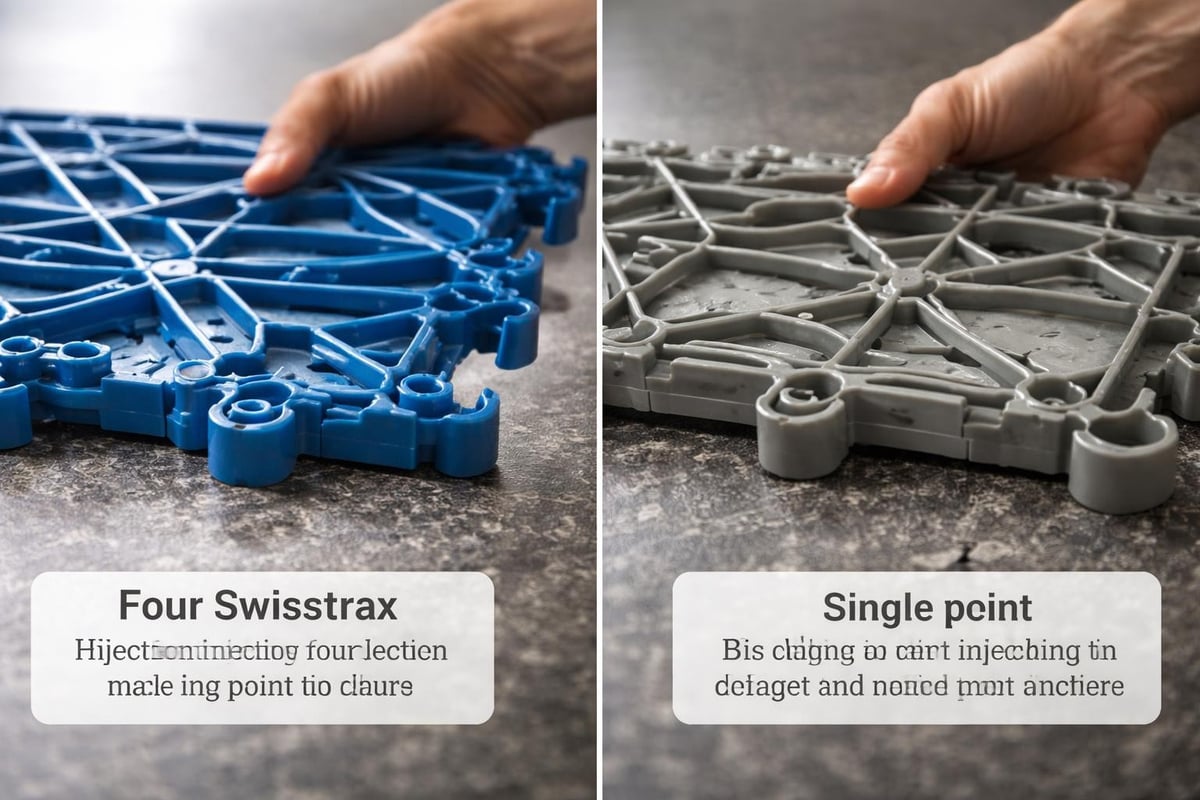
When evaluating materials for your garage flooring design, quality manufacturing processes separate professional solutions from inferior alternatives. Swisstrax modular tiles represent the pinnacle of flooring technology, utilizing a proprietary four-point injection molding process that eliminates air pockets and creates unmatched structural integrity.
Key performance metrics include:
- Impact resistance exceeding 15,000 PSI
- Temperature tolerance from negative 20 to 140 degrees Fahrenheit
- UV stability preventing color degradation
- Load distribution capabilities supporting vehicles up to 100,000 pounds
- Chemical resistance against petroleum products, acids, and cleaning solutions
Cheap imitation tiles imported from China may appear similar but lack the engineering precision and quality control that defines authentic Swisstrax products. These knockoffs use inferior plastics, single-point injection methods, and inconsistent sizing that leads to installation problems and premature failure. The manufacturing process matters significantly in garage flooring design because it directly impacts longevity and performance.
Design Options and Aesthetic Possibilities
Contemporary garage flooring design offers remarkable creative freedom through modular tile systems. Unlike permanent coatings or solid surfaces, interlocking tiles allow for customization, pattern creation, and easy modifications as your needs evolve. The comprehensive garage flooring solutions available today provide options ranging from bold racing stripes to sophisticated showroom finishes.
Color Schemes and Pattern Development
Strategic color selection transforms ordinary garages into extraordinary spaces. Professional designers recommend starting with your primary use case and building a palette that enhances functionality while reflecting personal taste. Standard colors provide versatile foundations, while specialty options enable precise matching to vehicle colors, brand identity, or architectural elements.
| Design Approach | Best Applications | Visual Impact |
|---|---|---|
| Monochromatic | Minimalist workshops, commercial spaces | Clean, professional, timeless |
| Two-tone checkerboard | Classic car displays, automotive enthusiasts | Bold, energetic, traditional |
| Multi-color patterns | Show garages, entertainment spaces | Dynamic, personalized, sophisticated |
| Border accents | Defined work zones, safety demarcation | Structured, organized, functional |
The Ribtrax Pro tile system excels in garage flooring design applications due to its distinctive ribbed surface pattern that adds visual depth while channeling liquids away from the surface. This revolutionary channel system allows debris to drain underneath each tile, maintaining a cleaner surface and easier maintenance routine.
Specialty colors expand creative possibilities beyond standard offerings. Metallic finishes, pearl effects, and custom color matching enable precise coordination with existing décor or branding requirements. For garage flooring design projects requiring premium visual impact, these specialty options deliver showroom-quality results.
Texture and Surface Finish Considerations
Surface texture plays a crucial role in both aesthetics and functionality within garage flooring design. The choice between ribbed, smooth, or diamond-tread patterns affects traction, cleaning ease, rolling resistance for equipment, and overall visual character.
Ribbed surfaces provide excellent traction and distinctive appearance while facilitating drainage. The raised ribs create shadow lines that add dimensional interest and help hide minor debris between cleanings. This texture works particularly well for multi-vehicle garages and spaces where occasional moisture is expected.
Smooth surfaces offer a refined, contemporary aesthetic ideal for showroom presentations and spaces where rolling toolboxes or equipment carts are frequently used. The Ribtrax Smooth Pro combines the drainage benefits of channeled construction with an even, professional surface that highlights vehicle details and creates gallery-like presentation quality.
Diamond-tread patterns deliver maximum slip resistance for workshops and commercial applications while maintaining aggressive visual appeal. The textured surface grips footwear effectively even when wet or contaminated with oils.
Installation Planning and Space Assessment
Effective garage flooring design requires thorough planning before installation begins. Professional assessment identifies potential challenges and ensures optimal results. Unlike permanent flooring solutions that demand extensive preparation and professional application, quality modular tiles offer flexibility that accommodates varying skill levels and project timelines.
Space Measurement and Layout Design
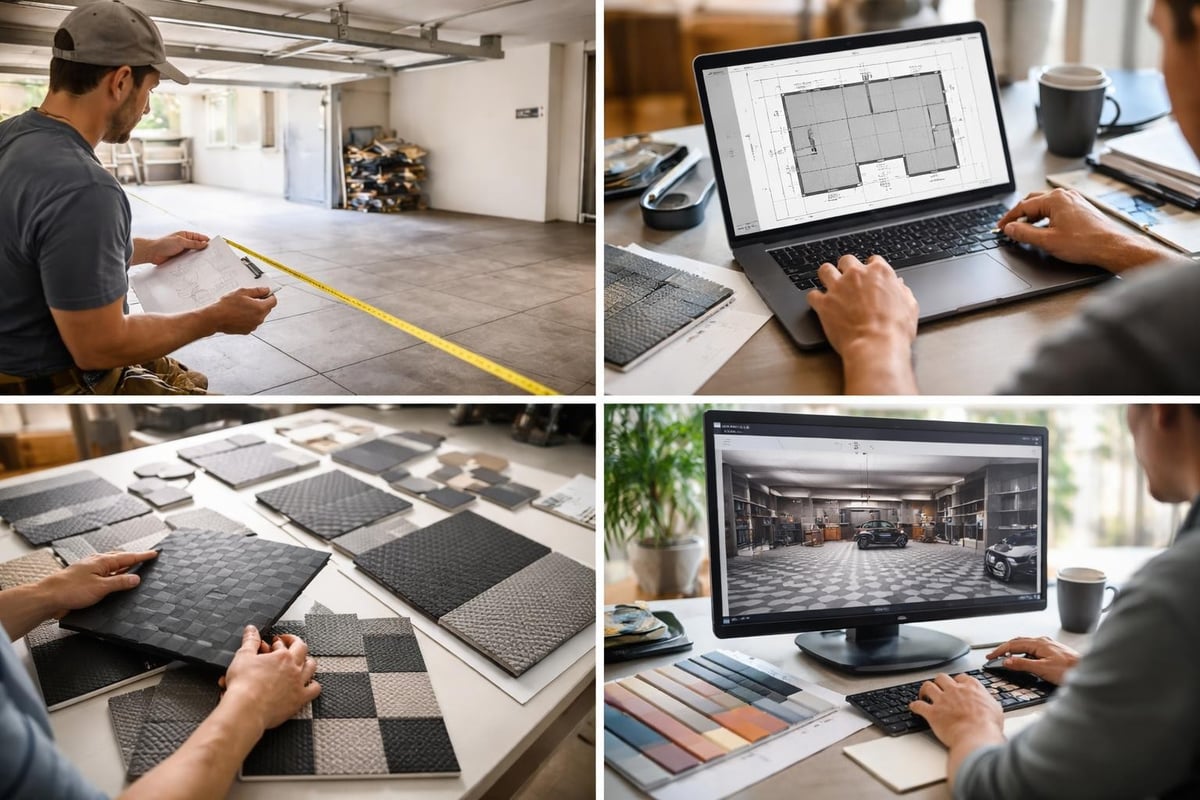
Accurate measurements form the foundation of successful garage flooring design. Modern tools like the Swisstrax 3D Designer enable precise visualization of finished layouts before purchasing materials. This digital planning capability prevents costly ordering errors and allows experimentation with different design configurations.
Critical measurement considerations include:
- Overall floor dimensions including irregular spaces
- Permanent fixture locations (drains, support columns, utility connections)
- Door swing clearances and threshold transitions
- Storage system footprints and work zone allocations
- Vehicle positioning and traffic flow patterns
Professional installers recommend adding 5% to calculated tile quantities to account for cutting waste and future repairs. This buffer proves valuable when creating complex patterns or working around obstacles that require custom fitting. For DIY installation projects, having extra tiles ensures pattern continuity if pieces become damaged during installation or future use.
Border transitions require special attention in garage flooring design. Ramped edge pieces create smooth transitions at doorways and perimeter edges, preventing tripping hazards while providing a finished, professional appearance. Corner pieces complete the installation with precise angles that maintain pattern integrity throughout the space.
Substrate Preparation and Condition Assessment
While modular tiles accommodate imperfect concrete better than epoxy coatings or other permanent solutions, proper substrate assessment ensures optimal performance. Your existing garage flooring design project begins with evaluating the foundation that supports your new surface.
Concrete floors should be structurally sound without major heaving, significant cracks, or active moisture issues. Minor imperfections, surface spalling, and cosmetic damage pose no problems for modular tile systems. The tiles' inherent flexibility allows them to conform to slight undulations while the interlocking system bridges minor gaps and cracks.
Substrate conditions that require attention:
- Active moisture seepage requiring drainage solutions
- Severe unevenness exceeding one inch over ten feet
- Crumbling concrete needing stabilization
- Significant oil saturation requiring degreasing
- Expansion joints wider than standard tile spacing
The beauty of authentic Swisstrax tiles lies in their forgiving installation requirements compared to alternative garage flooring design options. Comprehensive comparisons between modular tiles and epoxy coatings reveal that tiles require minimal surface preparation, install over existing coatings, and tolerate minor substrate imperfections that would ruin permanent finishes.
Advanced Design Techniques and Custom Applications
Professional garage flooring design extends beyond basic tile installation to incorporate logos, defined zones, and integrated safety features. These advanced applications transform functional spaces into branded environments that reflect ownership pride and attention to detail.
For automotive enthusiasts and collectors, incorporating vehicle manufacturer logos or personal branding creates immediate visual impact. The Graphtictrax system enables custom logo integration directly into the floor surface, delivering permanent graphics that withstand vehicle traffic and maintain color vibrancy for decades.
Zoning and Functional Area Definition
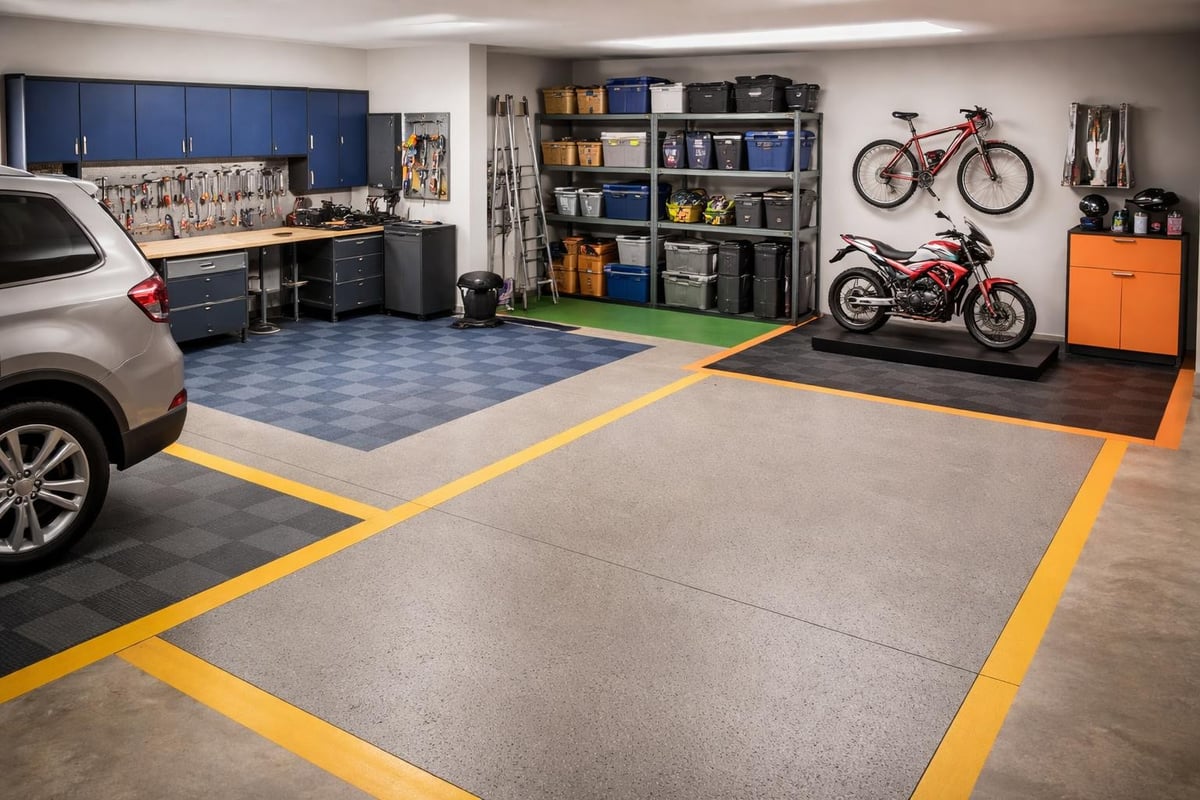
Strategic garage flooring design uses color and pattern changes to define specific functional zones within larger spaces. This approach enhances organization while creating visual interest that guides traffic flow and activity separation.
Common zoning applications include:
- Vehicle parking bays with contrasting borders
- Workshop areas with slip-resistant surfaces
- Storage zones with durable, easy-clean finishes
- Display platforms using premium visual textures
- Traffic lanes guiding movement patterns
Zone definition through flooring creates psychological boundaries that encourage organized use of space. A dedicated parking area with distinctive flooring naturally becomes the designated vehicle location, while a different surface texture in the workshop area signals the transition to active work space.
Color transitions between zones should maintain visual harmony while providing clear demarcation. Professional designers recommend using one primary color as a unifying element across the entire garage flooring design, then introducing accent colors to define specific areas. This approach creates cohesion while enabling functional differentiation.
Integration with Lighting and Storage Systems
Comprehensive garage flooring design considers how the floor surface interacts with overhead lighting and storage configurations. Lighter floor colors maximize light reflection, reducing the number of fixtures required for adequate illumination. This consideration becomes particularly important in garages lacking natural light or those converted to workshop use requiring detailed visual work.
The reflective properties of different tile surfaces affect ambient lighting differently. Smooth surfaces provide maximum light bounce, enhancing visibility throughout the space. Textured surfaces create subtle shadow patterns that add visual depth but slightly reduce overall brightness. Understanding these interactions during the garage flooring design phase ensures lighting plans complement rather than conflict with surface choices.
Storage system integration requires planning floor patterns around permanent fixtures and cabinets. Professional installations account for storage footprints during the design phase, ensuring pattern continuity flows naturally around obstacles rather than appearing chopped or poorly planned. This attention to detail separates professional garage flooring design from amateur installations.
Maintenance and Long-Term Performance
Superior garage flooring design delivers value through minimal maintenance requirements and decades of reliable performance. The selection of authentic Swisstrax tiles over inferior imitations directly impacts long-term satisfaction and total cost of ownership. Quality materials maintain appearance and structural integrity far longer than cheap alternatives that crack, fade, or delaminate within years.
Daily maintenance consists of simple sweeping or dry mopping to remove loose debris. The raised rib design of Ribtrax tiles allows particles to fall beneath the surface, keeping the top clean and preventing grinding of contaminants into the material. This self-cleaning characteristic distinguishes premium garage flooring design from traditional painted or coated surfaces that trap debris in every imperfection.
| Maintenance Task | Frequency | Time Required | Special Products |
|---|---|---|---|
| Sweeping/vacuuming | As needed | 5-10 minutes | None |
| Damp mopping | Weekly | 10-15 minutes | Mild detergent |
| Deep cleaning | Monthly | 20-30 minutes | Degreaser if needed |
| Tile inspection | Quarterly | 5 minutes | None |
| Edge adjustment | Annually | 10-15 minutes | None |
Stain Resistance and Chemical Tolerance
Authentic Swisstrax manufacturing processes create non-porous surfaces that resist staining from common garage contaminants. Motor oil, antifreeze, brake fluid, and other automotive chemicals simply wipe away without penetrating the tile material. This chemical resistance proves critical in garage flooring design for automotive applications where spills and drips occur regularly.
Imitation tiles lack the chemical formulation and quality control that enables true resistance to these substances. Inferior plastics may initially appear resistant but gradually absorb oils and solvents, leading to permanent discoloration and material degradation. The garage flooring design investment in authentic Swisstrax tiles pays dividends through sustained appearance and performance.
For stubborn stains or heavy buildup, pressure washing provides effective cleaning without damaging tile integrity. The interlocking system withstands high-pressure spray while the channeled underside allows water to drain freely. This capability enables periodic deep cleaning that restores showroom appearance regardless of use intensity.
Comparative Analysis of Flooring Solutions
Understanding how modular tiles compare to alternative garage flooring design options helps homeowners make informed decisions based on priorities, budget, and long-term goals. Each approach offers distinct advantages and limitations that suit different applications and expectations.
Modular Tiles Versus Epoxy Coatings
The debate between modular tiles and epoxy coatings dominates garage flooring design discussions. Both approaches deliver significant improvements over bare concrete, but their performance characteristics, installation requirements, and lifecycle costs differ substantially.
Modular tile advantages:
- Immediate installation without curing time
- No surface preparation beyond basic cleaning
- Damaged tiles individually replaceable
- Design changes accommodated through rearrangement
- No VOC emissions during installation
- Superior thermal comfort and sound dampening
- Installation possible over existing coatings
Epoxy coating limitations:
- Extensive surface preparation required
- Professional application recommended
- Multi-day installation with curing periods
- Repairs visible with color matching difficulties
- Potential for bubbling, peeling, or delamination
- Slippery when wet without texture additives
- Permanent installation complicates future changes
The detailed comparison of garage flooring options reveals that while epoxy initially appears less expensive, the total cost including proper application, maintenance, and eventual replacement often exceeds modular tile investments. Furthermore, epoxy failures typically require complete removal and reapplication, whereas modular systems allow targeted repairs maintaining original appearance.
For those seeking the sleek appearance of polished concrete without the permanence of coatings, Vinyltrax Pro tiles offer realistic stone and concrete patterns in a fully modular format. These industrial-grade vinyl-topped tiles deliver the sophisticated aesthetic of premium flooring while maintaining all the practical advantages of the Swisstrax modular system.

Roll-Out Mats and Temporary Solutions
Some homeowners consider roll-out mats as budget-friendly garage flooring design options. While these products serve specific temporary purposes, they fundamentally differ from permanent flooring solutions in durability, appearance, and functionality.
Roll-out products typically consist of rubber or PVC sheets that cover floor areas without adhesive attachment. They provide basic protection but lack the structural integrity, aesthetic appeal, and performance characteristics of engineered tile systems. Edges curl with temperature changes, seams separate under traffic, and the material compresses permanently under vehicle weight.
Professional garage flooring design projects rarely incorporate roll-out solutions except as temporary protection during construction or renovation work. For permanent installations requiring professional appearance and reliable performance, modular tile systems represent the minimum acceptable standard, with Swisstrax tiles defining the premium tier that delivers exceptional value through superior engineering and manufacturing quality.
Environmental Considerations and Sustainability
Modern garage flooring design increasingly considers environmental impact alongside performance and aesthetics. The selection of materials, manufacturing processes, and lifecycle expectations all contribute to the overall sustainability profile of flooring choices.
Swisstrax tiles utilize recyclable polypropylene copolymer manufactured through processes that minimize waste and energy consumption. The modular nature enables decades of service life, after which tiles can be recycled rather than contributing to landfill waste. This contrasts sharply with epoxy coatings containing volatile organic compounds that off-gas during application and cure, or cheap import tiles made from unknown materials with questionable environmental and health impacts.
The longevity of authentic Swisstrax products reduces environmental impact through extended replacement intervals. A properly installed Swisstrax floor delivers 20-plus years of service, whereas inferior alternatives may require replacement every 5-7 years. This durability difference multiplies environmental benefits across the product lifecycle.
Sustainability factors in garage flooring design:
- Manufacturing energy efficiency and waste reduction
- VOC emissions during and after installation
- Product lifespan and replacement frequency
- End-of-life recyclability options
- Shipping distances and carbon footprint
- Raw material sourcing and content
The European manufacturing base for authentic Swisstrax tiles significantly reduces shipping distances and associated carbon emissions compared to Asian imports. This geographic advantage combines with superior quality to create compelling value propositions for environmentally conscious consumers seeking responsible garage flooring design solutions.
Professional Installation Versus DIY Approaches
The accessibility of modular tile installation empowers homeowners to consider DIY garage flooring design projects. However, understanding when professional installation delivers superior value helps optimize results and satisfaction. The complexity of your design, available time, physical capabilities, and perfectionist tendencies all influence this decision.
Simple single-color installations in rectangular garages present minimal challenges for competent DIYers. The interlocking system requires no special tools or skills beyond careful measurement and systematic tile placement. Professional installation guidance provides resources supporting successful self-installation for straightforward projects.
Complex patterns, multiple colors, logo integration, or irregular spaces benefit significantly from professional expertise. Experienced installers optimize tile layout to minimize cuts, maintain pattern symmetry, and achieve precise logo positioning. The time savings and quality improvement often justify professional installation costs for demanding garage flooring design projects.
Professional installation also includes site assessment, substrate evaluation, and problem-solving for unexpected conditions discovered during floor clearing. This expertise prevents common mistakes that compromise appearance or performance. For high-value applications like collector car showrooms or commercial presentation spaces, professional installation ensures results matching the premium materials invested in the project.
Installation Timeline and Project Planning
Realistic timeline expectations prevent frustration and enable proper project planning. DIY garage flooring design installations typically require one to three days depending on space size and pattern complexity. Professional teams complete most residential garages in a single day, including furniture moving, surface preparation, and edge trim installation.
Typical installation phases include:
- Space clearing and cleaning (1-4 hours)
- Final measurement verification (30 minutes)
- Layout planning and starting point determination (30 minutes)
- Tile installation working from center or corner (4-8 hours)
- Edge trim and transition installation (1-2 hours)
- Final inspection and furniture replacement (1-2 hours)
Scheduling installation during favorable weather conditions eases the physical demands of the project. Moderate temperatures make the work more comfortable and prevent thermal expansion issues that occasionally affect tile dimensions at temperature extremes. Most professional installers recommend installation when garage temperatures range between 50 and 80 degrees Fahrenheit.
The beauty of modular garage flooring design lies in the immediate usability of completed installations. Unlike epoxy or other coating systems requiring days of curing before resuming normal garage use, modular tiles accept full vehicle weight and normal traffic immediately upon completion. This immediate functionality minimizes disruption to daily routines and allows faster return to normal garage operations.
Future-Proofing Your Garage Flooring Design
Strategic garage flooring design considers not only current needs but also anticipated future requirements and trends. The flexibility of modular tile systems supports evolving uses through simple reconfiguration rather than complete replacement. This adaptability protects your investment while accommodating lifestyle changes and emerging technologies.
Electric vehicle adoption influences garage design through charging infrastructure requirements and different usage patterns. The chemical resistance and electrical insulation properties of quality modular tiles accommodate charging equipment installation while protecting against potential battery leaks or coolant spills associated with EV technology.
Smart home integration increasingly extends to garage spaces through connected storage systems, automated lighting, and environmental controls. Garage flooring design that incorporates clean aesthetics and flexible layouts supports these technological additions without requiring floor modifications. The removable nature of tiles allows access to underfloor wiring or sensor installations as smart garage systems evolve.
Future-proofing considerations include:
- Accommodating larger vehicles or different parking configurations
- Supporting heavier storage systems or equipment additions
- Enabling hobby transitions from automotive to workshop uses
- Maintaining resale appeal through timeless design choices
- Allowing technology integration without permanent modifications
The investment in authentic Swisstrax tiles provides decades of service that outlasts typical homeownership periods. This longevity ensures your garage flooring design remains an attractive feature during property marketing rather than a dated element requiring replacement. The comprehensive warranty coverage protects against manufacturing defects and provides confidence in long-term performance.
Commercial Applications and Business Use Cases
While residential garage flooring design dominates the market, commercial applications demonstrate the versatility and performance capabilities of premium modular systems. Automotive dealerships, service centers, showrooms, and retail spaces leverage Swisstrax tiles to create professional environments that enhance brand image while delivering practical durability.
Dealership showrooms benefit from the clean, sophisticated appearance that highlights vehicle features without competing for visual attention. The ability to create branded color schemes and integrate logos reinforces corporate identity while the chemical resistance and easy maintenance support daily operations. Several high-end manufacturers specify Swisstrax tiles for authorized dealer facilities based on quality standards and brand alignment.
Service and repair facilities require garage flooring design that withstands constant traffic, chemical exposure, and heavy equipment while maintaining professional appearance. The combination of durability, slip resistance, and easy cleaning makes modular tiles ideal for these demanding environments. Unlike epoxy coatings that degrade rapidly under commercial use, quality tiles maintain appearance and performance for years despite intensive daily abuse.
Trade show and event applications leverage the temporary installation capabilities of modular systems. Exhibit designers create custom branded floors that install rapidly without venue damage, then remove and reuse for subsequent events. This flexibility transforms garage flooring design technology into portable marketing tools that reinforce brand presence across multiple locations and campaigns.
Thoughtful garage flooring design transforms ordinary concrete into exceptional spaces that enhance property value, support diverse activities, and deliver decades of reliable performance. The critical distinction between authentic Swisstrax tiles and inferior imitations determines whether your investment provides lasting satisfaction or disappointing results requiring costly replacement. Elite Modular Flooring brings expert guidance, professional installation, and authentic Swisstrax products to projects throughout the UK, ensuring your garage flooring design achieves the quality and performance you expect. Contact Elite Modular Flooring for a no-obligation consultation and 3D design visualization that brings your garage vision to life with precision and professionalism.

