

Garage Floor Tile Installation: Complete Expert Guide 2026

Transforming your garage with modular floor tiles represents one of the most effective upgrades for residential and commercial spaces in 2026. Garage floor tile installation offers a practical, durable, and aesthetically pleasing solution that outperforms traditional epoxy coatings and painted floors. Whether you're creating a pristine showroom for your vehicle collection, establishing a functional workshop, or simply upgrading your home's value, understanding the installation process ensures optimal results. This comprehensive guide walks you through every stage of garage floor tile installation, from initial surface preparation to final finishing touches, while highlighting the superior quality of authentic Swisstrax systems compared to inferior Chinese imitations.
Understanding Modular Garage Floor Tile Systems
Modular garage flooring has revolutionized how property owners approach garage renovations. Unlike permanent solutions that require professional application and extensive curing time, interlocking tile systems offer immediate usability and exceptional performance characteristics.
The Engineering Behind Quality Tiles
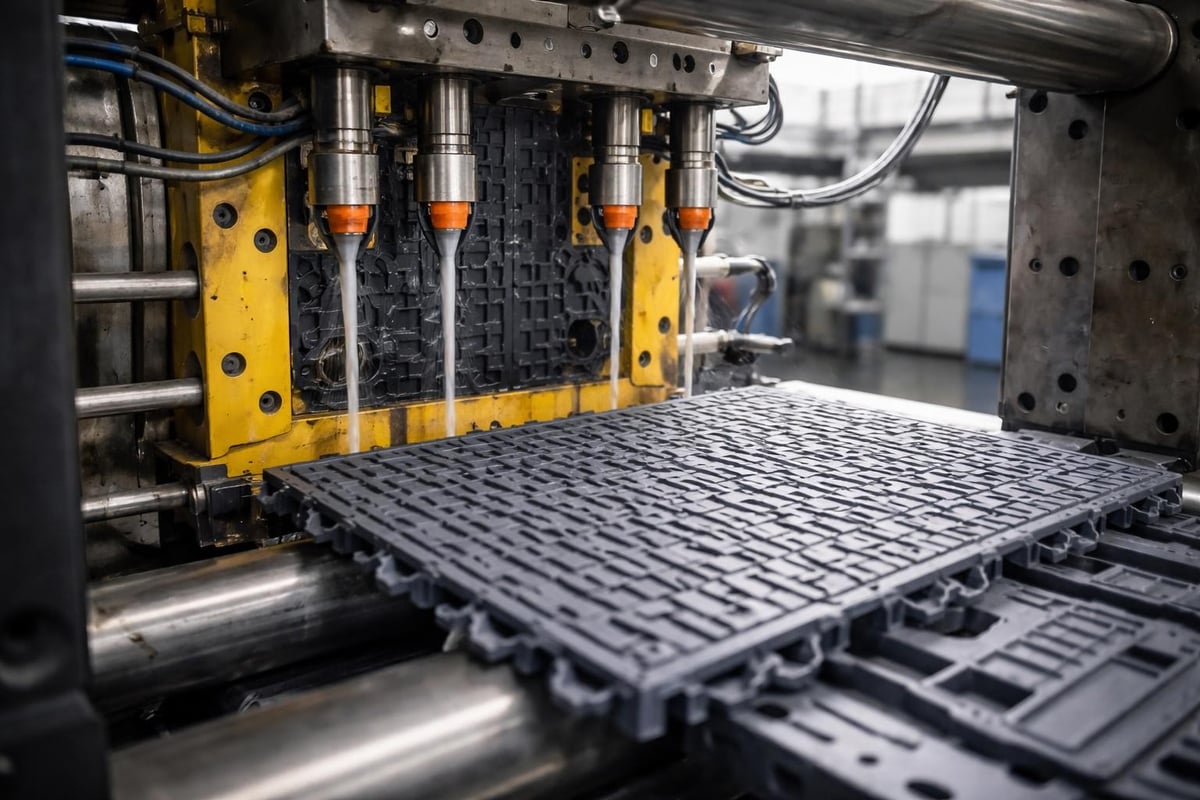
Premium modular tiles utilize advanced manufacturing processes that create superior structural integrity. Authentic Swisstrax tiles employ a four-point injection molding technique that eliminates air pockets during production, resulting in tiles that withstand heavy loads, chemical exposure, and thermal cycling without warping or cracking.
Key manufacturing differentiators include:
- Precision engineering with tolerances measured in micrometers
- Virgin polypropylene material selection for maximum durability
- Multi-point injection molding for consistent density
- Integrated drainage channels designed into the tile structure
- UV-stabilized compounds preventing color degradation
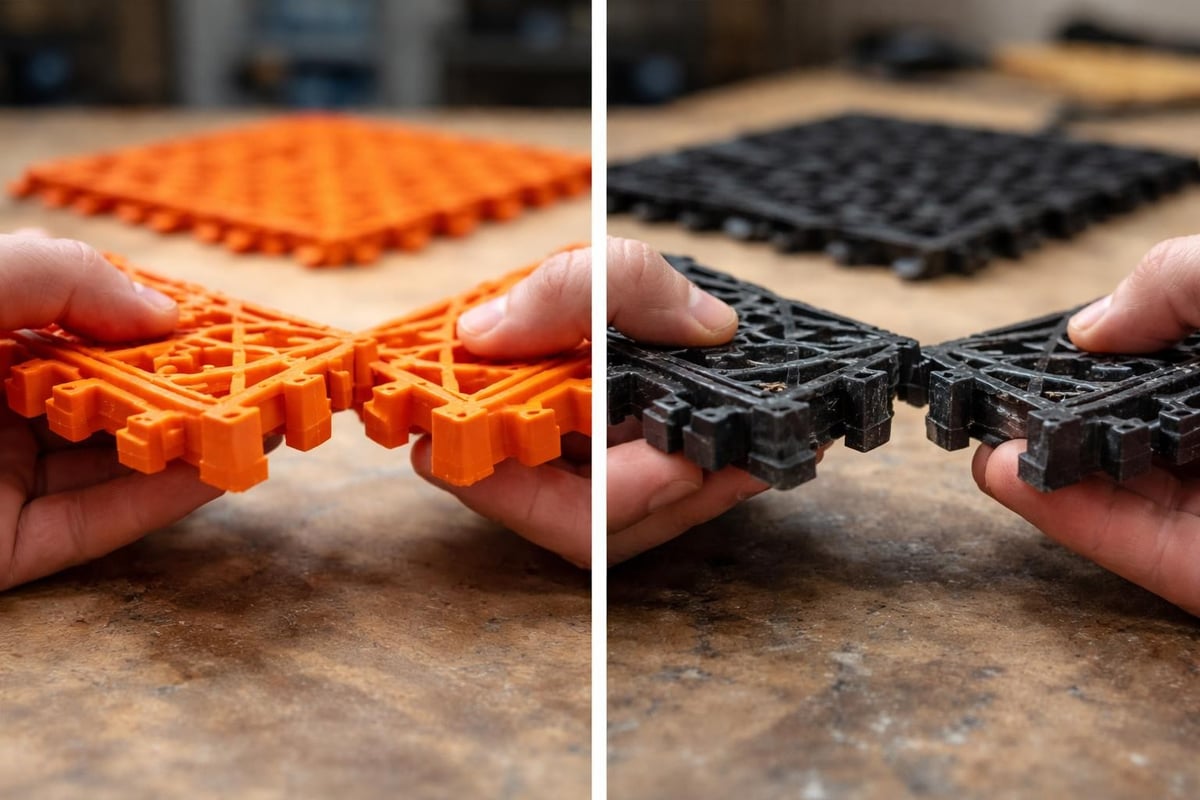
The market contains numerous imitation products manufactured in China that superficially resemble premium systems but lack the engineering sophistication and material quality. These inferior copies typically use recycled plastics, single-point injection methods, and simplified designs that fail under sustained use.
Pre-Installation Planning and Measurement
Successful garage floor tile installation begins long before the first tile contacts your concrete. Thorough planning prevents material shortages, installation errors, and design disappointments.
Accurate Floor Measurement
Measure your garage space carefully, accounting for irregular shapes, doorways, and permanent fixtures. Most garages feature standard dimensions, but older properties may have non-square layouts requiring additional planning.
| Measurement Task | Best Practice | Common Mistake to Avoid |
|---|---|---|
| Length and width | Measure at multiple points | Assuming walls are parallel |
| Doorway clearances | Account for tile thickness | Ignoring door swing radius |
| Obstacles | Map post locations precisely | Estimating around obstructions |
| Expansion gaps | Plan 3-5mm perimeter spacing | Installing wall-to-wall tight |
Professional installers recommend ordering 5-10% additional tiles beyond calculated requirements. This buffer accommodates cutting waste, future repairs, and pattern adjustments during installation.
Design Visualization and Layout Planning
Before purchasing materials, create a visual representation of your finished floor. Elite Modular Flooring's 3D design tools allow you to experiment with color combinations, patterns, and tile orientations digitally.
Consider these design elements:
- Color schemes that complement your garage's purpose
- Pattern layouts including checkerboard, striped, or custom designs
- Border definitions using contrasting colors
- Logo placements for commercial applications
- Traffic flow patterns for optimal tile orientation
Surface Preparation Requirements
Proper substrate preparation determines installation success and long-term performance. Unlike epoxy coatings that demand pristine concrete conditions, modular tiles accommodate minor imperfections, but certain standards must be met.
Concrete Condition Assessment
Inspect your existing concrete slab for structural issues. Understanding garage flooring options helps you determine whether modular tiles suit your specific conditions.
Required surface characteristics:
- Flatness within 3mm per 3 meters
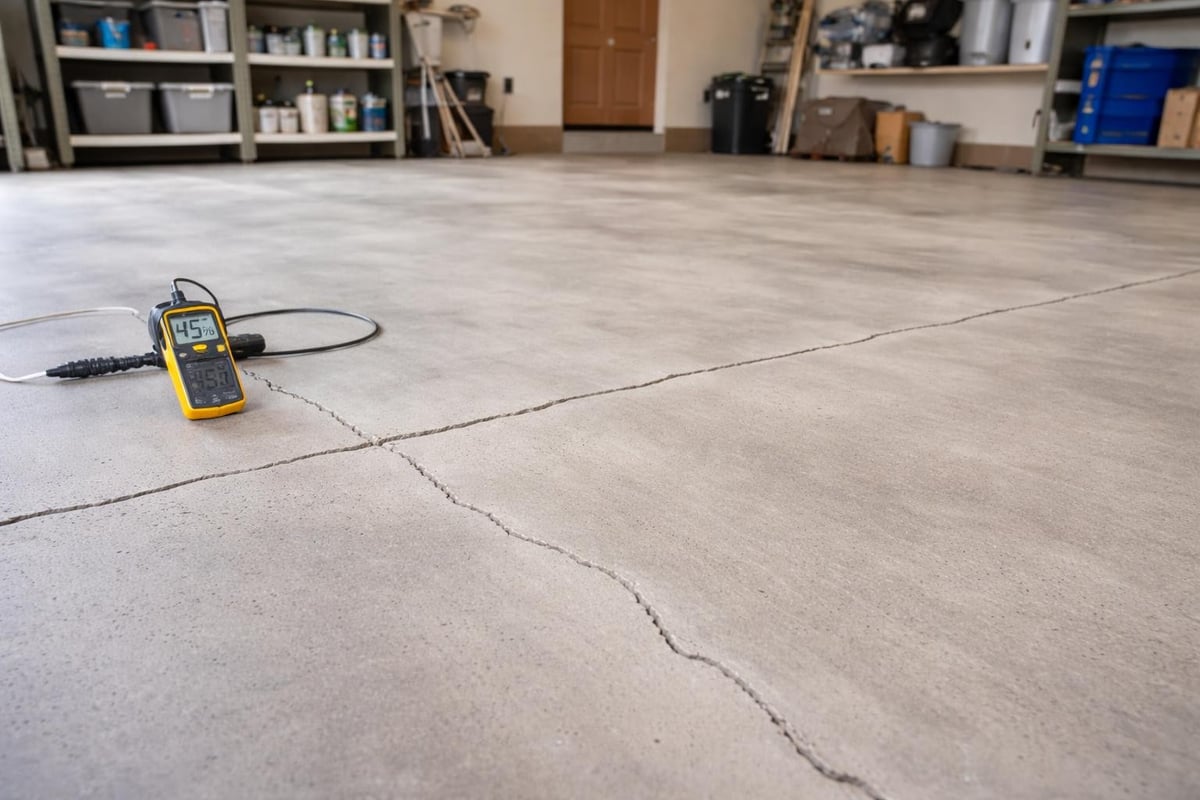
- Structural soundness without major cracking
- Load-bearing capacity appropriate for intended use
- Moisture levels below critical thresholds
- Age exceeding 28 days for new concrete
Cleaning and Preparation Steps
A clean, dry surface ensures optimal installation. Follow this systematic approach:
- Remove all contents from the garage completely
- Sweep thoroughly to eliminate loose debris
- Degrease oil-stained areas using appropriate cleaners
- Pressure wash the entire surface if necessary
- Allow complete drying for 24-48 hours minimum
- Fill major cracks exceeding 6mm width
- Test moisture levels using appropriate meters
The preparation phase significantly impacts installation quality and longevity. Rushing this stage leads to tile movement, uneven surfaces, and premature wear.
Step-by-Step Installation Process
Garage floor tile installation follows a logical sequence that builds from the starting corner outward. Understanding this progression prevents common errors and ensures professional results.
Establishing Your Starting Point
Most installations begin from a corner or doorway, working systematically across the space. The selected starting point influences pattern alignment and cutting requirements.
Starting position considerations:
- Begin from the most visible corner for aesthetic impact
- Start at the garage door for functional spaces
- Work from the back wall forward for workshops
- Consider natural light direction and viewing angles
Installing the First Row
The inaugural row establishes alignment for the entire installation. Take extra time ensuring these tiles form a perfectly straight line.
Professional installers use a chalk line or laser level to maintain straightness. Each tile connects via the interlocking mechanism, creating a secure bond that requires no adhesives. The distinctive clicking sound when tiles properly engage confirms correct installation.
Building Out the Field
After establishing the first row, installation proceeds rapidly. DIY installation guides provide detailed visual instructions for homeowners tackling their own garage floor tile installation.
| Installation Stage | Time Estimate | Difficulty Level |
|---|---|---|
| First corner (25 tiles) | 30-45 minutes | Moderate |
| Field installation (per 100 tiles) | 60-90 minutes | Easy |
| Edge trimming | 2-4 hours | Moderate to Difficult |
| Ramp installation | 30-60 minutes | Easy |
Work methodically across the floor, maintaining consistent pressure when connecting tiles. Quality tiles interlock with minimal force, while inferior products often require excessive pressure or refuse to connect properly.
Cutting Tiles for Perimeter Fit
Edges typically require custom-cut tiles to achieve proper fit. Use appropriate cutting tools based on tile thickness and material composition.
Recommended cutting methods:
- Circular saw with fine-tooth blade for straight cuts
- Jigsaw for curved cuts around obstacles
- Table saw for production cutting of multiple identical pieces
- Utility knife scoring for thin tiles (less common with premium systems)
Measure twice, cut once. Create cardboard templates for complex shapes before cutting expensive tiles. Common installation issues often stem from imprecise cutting and poor measurement practices.
Installing Edge Ramps and Transitions
Edge treatment differentiates professional installations from amateur attempts. Ramp edges provide smooth transitions preventing trip hazards and protecting tile edges from impact damage.
Ramp Edge Selection and Installation
Swisstrax offers multiple ramp edge profiles designed for specific applications. Ramp edge systems integrate seamlessly with the tile field, creating clean, professional boundaries.
Available edge profiles:
- Pegged ramps for permanent installation security
- Looped ramps for removable configurations
- Corner pieces for 90-degree transitions
- Custom lengths for non-standard dimensions
Installation involves positioning the ramp along the perimeter and connecting it to the field tiles through the same interlocking mechanism. Corners require special pieces that maintain the ramp profile through directional changes.
Threshold and Doorway Transitions
Doorway transitions demand careful attention to ensure smooth vehicle and foot traffic flow. Calculate tile thickness plus underlayment when determining clearance requirements.
For standard residential garage doors, most modular tile systems add 18-20mm to floor height. This elevation typically doesn't create issues but should be considered during planning stages. Commercial applications with specific ADA compliance requirements may need custom threshold solutions.
Advanced Installation Techniques
Beyond basic installation, several techniques enhance performance and appearance for demanding applications.
Creating Custom Patterns and Designs
Premium installations often incorporate multiple colors, creating visual interest and functional zoning. Showroom-quality floors demonstrate the design possibilities achievable with careful planning.
Design implementation strategies:
- Map the pattern using graph paper or digital tools
- Sort tiles by color before installation begins
- Install pattern elements first, then fill surrounding areas
- Maintain pattern registration throughout the installation
- Verify alignment regularly during installation
Custom logo installations require precise cutting and layout. GraphTicTrax systems enable permanent logo integration through specialized printing and cutting processes.
Addressing Uneven Concrete Surfaces
While modular tiles tolerate minor imperfections, significant depressions or raised areas require remediation. The elevated design of tiles like Ribtrax Pro accommodates small irregularities through its integrated drainage channels, allowing debris and moisture to pass beneath the surface.
For more substantial issues:
- Grind down high spots using concrete grinders
- Fill depressions with self-leveling compounds
- Use leveling shims beneath individual tiles (temporary solution)
- Install underlayment for cushioning and minor leveling
Quality Comparison: Authentic vs. Imitation Tiles
The market contains numerous products claiming equivalence to premium Swisstrax systems. These imitations universally fail to match the quality, durability, and performance of authentic tiles manufactured to exacting standards.
Manufacturing Process Differences
Genuine Swisstrax tiles undergo rigorous quality control throughout production. The four-point injection molding process creates uniform density impossible to achieve with single-point or simplified manufacturing methods common in Chinese imitations.
| Quality Factor | Swisstrax Authentic | Chinese Imitations |
|---|---|---|
| Material source | Virgin polypropylene | Recycled mixed plastics |
| Injection points | Four-point system | Single or dual-point |
| Quality control | Every tile inspected | Batch sampling only |
| Dimensional tolerance | ±0.2mm | ±2-5mm |
| Load capacity | Tested to 25,000 kg/m² | Often untested |
| UV stability | 10+ year guarantee | Fades within 2-3 years |
Performance Under Real-World Conditions
Independent testing reveals dramatic performance gaps between authentic and counterfeit systems. Inferior tiles exhibit warping under temperature fluctuations, cracking under point loads, and interlocking failure after minimal use.
Common failure modes of imitation tiles:
- Tab breakage during installation or normal use
- Color fading from UV exposure within months
- Tile warping in hot weather conditions
- Surface cracking under vehicle loads
- Delamination of surface layers
Swisstrax tiles backed by comprehensive warranty coverage provide long-term value that far exceeds any initial cost savings from purchasing imitation products. The warranty specifically excludes non-genuine tiles, reinforcing the importance of authenticated products.
Post-Installation Care and Maintenance
Proper maintenance preserves appearance and extends service life. Fortunately, garage floor tile installation delivers maintenance advantages compared to alternative flooring solutions.
Cleaning Procedures and Frequency
The raised profile and drainage channels characteristic of premium tiles simplify cleaning dramatically. Debris, fluids, and contaminants pass beneath the surface rather than staining the floor.
Recommended maintenance schedule:
- Daily: Sweep or blow out loose debris
- Weekly: Mop with mild detergent solution
- Monthly: Pressure wash if needed
- Annually: Inspect for damage or wear
- As needed: Replace individual damaged tiles
Unlike epoxy floors requiring recoating or sealed concrete demanding periodic renewal, modular tiles maintain appearance indefinitely with basic cleaning. Chemical resistance prevents staining from automotive fluids, fertilizers, and household products.
Seasonal Considerations
Temperature fluctuations affect all flooring materials. Quality modular tiles engineered for garage environments accommodate expansion and contraction without buckling or separation.
Winter considerations include:
- Snow and ice melt drainage through tile channels
- Salt and chemical resistance preventing surface damage
- Maintained traction even when wet or icy
- No cracking from freeze-thaw cycles
Summer heat management involves:
- UV-stable compounds preventing fading and degradation
- Thermal expansion accommodation through proper installation
- Surface temperature moderation compared to bare concrete
- Maintained structural integrity at elevated temperatures
Professional Installation vs. DIY Approach
Homeowners frequently debate whether to tackle garage floor tile installation themselves or engage professional installers. Both approaches offer distinct advantages depending on circumstances.
DIY Installation Benefits and Challenges
Modular tiles specifically designed for DIY installation enable capable homeowners to achieve professional results. Installation tutorials demonstrate the straightforward process that requires minimal specialized tools.
DIY advantages:
- Cost savings on labor expenses
- Installation scheduling flexibility
- Personal satisfaction from completed project
- Learning experience for future projects
DIY challenges:
- Time investment for larger spaces
- Physical demands of repetitive work
- Cutting precision requirements
- Pattern planning complexity
For standard single-car garages with simple layouts, DIY installation typically succeeds without complications. Larger spaces, complex patterns, or commercial applications benefit from professional expertise.
Professional Installation Value Proposition
Professional installation services guarantee perfect results through experienced technicians using specialized equipment and techniques.
Professional installation includes:
- Comprehensive floor assessment identifying potential issues
- Detailed measurement and planning optimizing material usage
- Expert surface preparation ensuring optimal conditions
- Precision installation with perfect alignment
- Custom cutting for complex shapes and patterns
- Quality guarantee backing the completed work
The investment in professional garage floor tile installation delivers peace of mind, immediate completion, and certified results that maximize your flooring investment's value and longevity.
Specialized Applications and Configurations
Beyond standard garage installations, modular tile systems adapt to diverse applications requiring specific performance characteristics.
Showroom and Display Environments
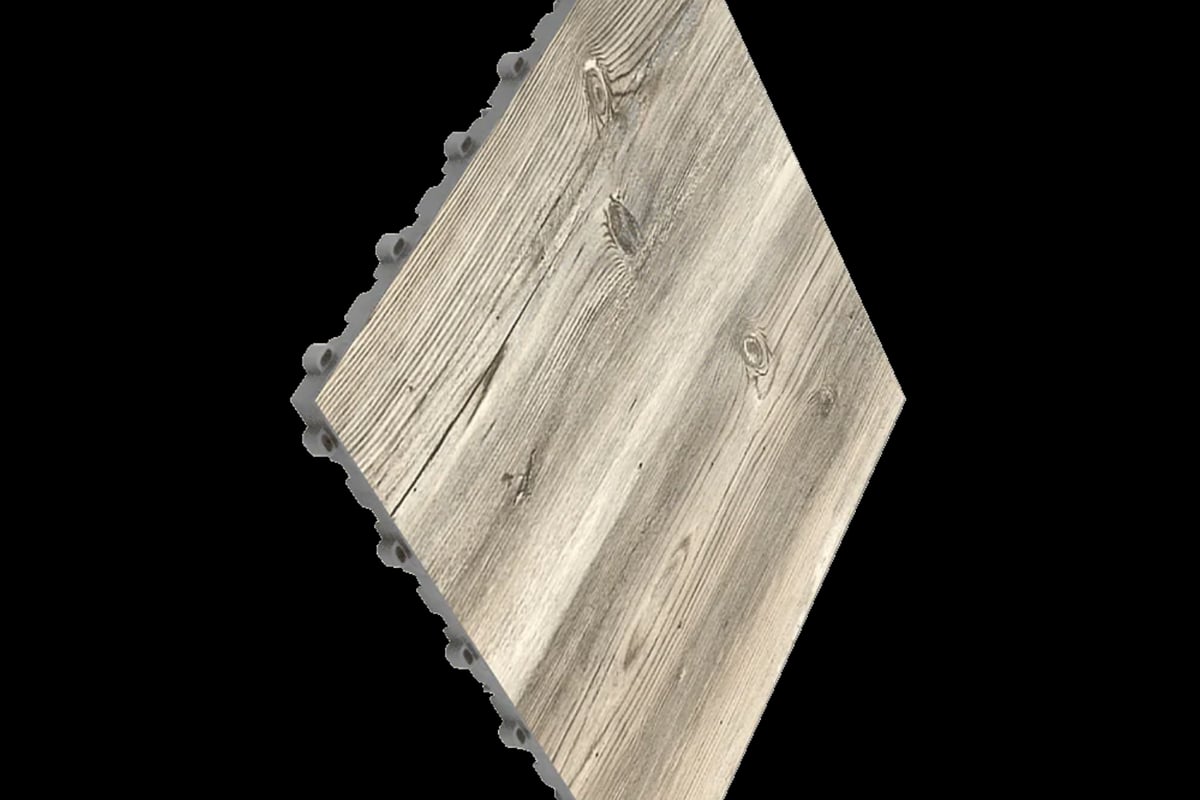
Vehicle showrooms demand pristine appearance combined with exceptional durability. Vinyltrax Pro Polished Concrete delivers sophisticated aesthetics rivaling permanent flooring while maintaining modular system advantages.
This revolutionary solid industrial tile offers realistic patterns including polished concrete, marble, and carbon fiber finishes. The seamless appearance created by edge-to-edge installation transforms commercial spaces into premium environments that enhance product presentation.
Showroom installation considerations include:
- Pattern continuity across large open spaces
- Logo integration for branding impact
- Lighting reflection optimization
- Maintenance accessibility for quick cleaning
- Reconfiguration flexibility for changing displays
Multi-Purpose Workshop Spaces
Workshops combining vehicle maintenance, woodworking, and general projects benefit from modular flooring's chemical resistance and easy cleaning. The ability to replace individual damaged tiles preserves appearance despite harsh use conditions.
Zone different areas using contrasting colors:
- Vehicle work zones in dark colors hiding tire marks
- Assembly areas in lighter colors improving visibility
- Storage sections in neutral tones
- Walkways in high-contrast colors for safety
Gym and Fitness Applications
Home gyms increasingly occupy garage spaces, requiring flooring that accommodates both vehicles and exercise equipment. Premium tiles support heavy weights while providing comfortable standing surfaces for workout activities.
Cost Analysis and Return on Investment
Understanding garage floor tile installation costs helps budget appropriately while recognizing long-term value compared to alternative flooring solutions.
Material Cost Factors
Tile pricing varies based on style, color, and performance characteristics. Standard colors typically cost less than specialty finishes, while solid tiles command premium pricing over open-grid designs.
Price influencing factors:
- Tile style and design complexity
- Color selection (standard vs. specialty)
- Order quantity and volume discounts
- Edge ramp requirements
- Shipping and delivery charges
When comparing options, consider total project costs including preparation, installation, and long-term maintenance rather than material prices alone.
Long-Term Value Comparison
| Flooring Type | Initial Cost | Lifespan | Maintenance | Total 10-Year Cost |
|---|---|---|---|---|
| Premium tiles | Moderate | 20+ years | Minimal | Lowest |
| Epoxy coating | Low-Moderate | 5-7 years | Moderate | Moderate |
| Painted concrete | Very Low | 2-3 years | High | Moderate-High |
| Bare concrete | None | Indefinite | Very High | Hidden costs |
Modular tiles eliminate recoating expenses, minimize cleaning costs, and prevent concrete deterioration requiring expensive repairs. The ability to remove and reinstall tiles when relocating provides portability value impossible with permanent solutions.
Property Value Enhancement
Quality garage flooring contributes to overall property value and marketability. Prospective buyers increasingly expect finished garages as standard features rather than optional upgrades.
Home value impacts include:
- Enhanced curb appeal from visible improvements
- Increased functional square footage
- Demonstrated property care and maintenance
- Competitive advantage in sales situations
- Faster sale times in competitive markets
Troubleshooting Common Installation Issues
Despite straightforward installation processes, certain challenges occasionally arise during garage floor tile installation projects.
Tile Interconnection Problems
Properly manufactured tiles connect effortlessly with moderate hand pressure. Difficulty joining tiles typically indicates surface irregularities, temperature issues, or product defects.
Solutions for connection difficulties:
- Verify concrete flatness beneath problematic areas
- Ensure tiles have acclimated to ambient temperature
- Inspect tabs and loops for damage
- Confirm tiles match the same product line
- Contact manufacturer for defective product replacement
Imitation tiles frequently exhibit connection inconsistencies due to poor dimensional control. Installation issue resources provide additional troubleshooting guidance.
Pattern Alignment Challenges
Complex multi-color patterns require careful planning to maintain proper registration. Misalignment becomes increasingly apparent as installation progresses, potentially requiring partial reinstallation.
Prevention strategies:
- Create detailed layout plans before starting
- Mark reference lines on the concrete substrate
- Verify pattern alignment every 10-15 tiles
- Use temporary spacers maintaining consistent gaps
- Step back regularly to assess overall appearance
Expansion Gap Management
While modular tiles accommodate thermal movement internally, perimeter gaps prevent buckling during extreme temperature swings. Insufficient gaps cause edge lifting or center buckling.
Maintain 3-5mm gaps along all walls and permanent fixtures. These small spaces remain invisible once edge ramps install but provide critical expansion allowance preventing structural issues.
Environmental Considerations and Sustainability
Modern consumers increasingly prioritize environmental responsibility when selecting building materials. Premium modular tile systems offer several sustainability advantages.
Material Composition and Recyclability
Swisstrax tiles manufactured from virgin polypropylene utilize recyclable materials that can be reprocessed at end-of-life. Unlike epoxy coatings containing harmful solvents or concrete sealers with volatile organic compounds, modular tiles contain no toxic substances.
The manufacturing process generates minimal waste, with production scraps recycled directly into new products. This closed-loop system reduces environmental impact while maintaining strict quality standards.
Longevity and Resource Conservation
Extended product lifespan represents the most significant sustainability contribution. Tiles lasting 20+ years avoid the repeated material consumption and disposal associated with coatings requiring renewal every 5-7 years.
Environmental benefits include:
- Reduced material consumption over time
- Eliminated chemical waste from recoating
- Lower transportation impacts from fewer replacements
- Preservation of underlying concrete preventing demolition
- Removability enabling reuse in future locations
Energy Efficiency Considerations
The air gap beneath raised tiles provides minor insulation value, potentially reducing heating costs in climate-controlled garages. The thermal mass effect moderates temperature extremes compared to bare concrete.
Light-colored tiles improve natural lighting effectiveness, reducing artificial lighting requirements during daytime hours. This passive energy savings accumulates significantly over decades of use.
Selecting the Right Tile System
Numerous tile styles serve different functional and aesthetic requirements. Understanding performance characteristics helps match systems to specific applications.
Open-Grid vs. Solid Tile Designs
Open-grid tiles like Ribtrax Pro feature drainage channels allowing liquid passage and debris shedding. Solid tiles provide seamless surfaces ideal for rolling loads and pristine appearance.
Open-grid advantages:
- Superior drainage preventing standing water
- Self-cleaning through debris shedding
- Enhanced air circulation
- Lighter weight for easier handling
- Lower material costs
Solid tile advantages:
- Seamless appearance for upscale installations
- Easier rolling of carts and equipment
- Enhanced sound dampening
- Realistic material simulations
- Premium aesthetic impact
Color Selection Strategies
Strategic color choices enhance functionality while creating desired aesthetics. Consider both practical and visual factors when selecting palette options.
Dark colors effectively hide tire marks, oil drips, and general dirt accumulation. Light colors brighten spaces, improve visibility, and create clean, modern aesthetics. Contrasting combinations enable creative patterns while defining functional zones.
Browse available colors to visualize possibilities and request sample tiles experiencing actual appearance and texture before committing to full orders.
Performance Specifications Review
Verify tiles meet specific performance requirements for intended applications. Critical specifications include:
- Load capacity for vehicle weights and equipment
- Chemical resistance for expected exposure
- Temperature range for climate conditions
- Slip resistance for safety requirements
- Fire rating for certain commercial applications
Premium Swisstrax products exceed industry standards across all performance categories, providing confidence regardless of demanding application requirements.
Advanced Design Techniques
Sophisticated installations incorporate design elements that transform functional flooring into architectural statements.
Geometric Pattern Integration
Beyond simple checkerboards, complex geometric patterns create visual dynamism and custom character. Popular designs include:
- Diagonal orientations creating perception of larger spaces
- Bordered fields with contrasting perimeter colors
- Radiating patterns emanating from central points
- Alternating stripe widths for modern aesthetics
- Chevron layouts adding directional emphasis
Implementing complex patterns requires precise planning and careful installation. Use design software to experiment with options before purchasing materials.
Branding and Logo Applications
Commercial installations benefit from integrated branding elements reinforcing corporate identity. Custom logo tiles or cut patterns incorporate company marks, team affiliations, or personal interests.
Custom logo capabilities enable permanent integration of detailed graphics and text into the floor surface. This specialized service transforms functional flooring into marketing tools and brand statements.
Multi-Space Coordination
Properties with multiple garage bays or connected spaces benefit from coordinated designs creating visual continuity. Consistent color schemes with varied patterns differentiate spaces while maintaining cohesive aesthetics.
Consider traffic flow between spaces when planning transitions. Color changes can subtly guide movement patterns or delineate functional zones within open layouts.
Successfully completing garage floor tile installation requires careful planning, quality materials, and attention to detail throughout every phase. By following proper preparation procedures, using authentic Swisstrax products engineered for lasting performance, and implementing proven installation techniques, you'll achieve professional results that transform your garage into a functional, attractive space. Whether you choose DIY installation or professional services, Elite Modular Flooring provides expert guidance, premium Swisstrax products, and comprehensive support ensuring your project exceeds expectations. Contact their experienced team today to receive your no-obligation quote and discover how authentic modular flooring elevates your space with unmatched quality and lasting value.

