

Floor Coverings for Garage Floors: A Complete Guide

Garage floors endure constant punishment from vehicle traffic, chemical spills, temperature fluctuations, and heavy equipment. Traditional concrete surfaces quickly show wear through cracking, staining, and deterioration, which is why selecting appropriate floor coverings for garage floors has become essential for property owners seeking durability and visual appeal. Modern garage flooring solutions offer protection, improved aesthetics, and enhanced functionality that transform utilitarian spaces into professional-grade environments suitable for workshops, showrooms, or multi-purpose areas.
Understanding Floor Coverings for Garage Floors
Floor coverings for garage floors represent a diverse category of products designed to protect and enhance concrete surfaces. Unlike permanent coatings that chemically bond to concrete, coverings sit on top of the existing floor and can be removed or replaced as needed.
These solutions range from interlocking modular tiles to roll-out vinyl products and peel-and-stick alternatives. Each type offers distinct advantages depending on application requirements, budget considerations, and desired longevity. The various garage flooring options available today provide flexibility that wasn't possible just a decade ago.
Key Categories of Garage Floor Coverings
Modular Interlocking Tiles represent the premium segment of garage flooring solutions. These tiles connect through engineered locking systems that create seamless installations without adhesives or special tools. Available in materials ranging from rigid polypropylene to composite formulations, modular systems accommodate thermal expansion and contraction while maintaining structural integrity.
Roll-Out Vinyl Flooring provides quick installation over existing concrete. These products typically feature PVC construction with textured surfaces for traction and come in various thickness grades. Installation requires measuring, cutting, and sometimes securing edges with tape or adhesive.
Peel-and-Stick Tiles offer an economical entry point for garage floor improvements. These adhesive-backed products bond directly to clean, dry concrete and provide basic protection against staining and minor impacts.
Advantages of Modular Tile Systems
Modular tile systems from manufacturers like Swisstrax deliver unmatched versatility for residential and commercial applications. These engineered products combine durability with aesthetic flexibility that transforms garage environments.
Performance Characteristics
The Swisstrax tiles available through authorized dealers feature high-impact polypropylene construction that withstands vehicle loads, chemical exposure, and temperature extremes. Their open-grid design facilitates drainage and airflow, preventing moisture accumulation underneath the flooring surface.
Load-bearing capacity exceeds 25,000 pounds per square foot in commercial-grade systems, making them suitable for heavy equipment and vehicle storage. Chemical resistance protects against oils, gasoline, antifreeze, and common garage solvents without degradation.
Consider these performance metrics when evaluating modular systems:
- Temperature tolerance: -40°F to 140°F operational range
- Impact resistance: Exceeds requirements for automotive shop environments
- UV stability: Minimal color fade under direct sunlight exposure
- Warranty coverage: Manufacturer guarantees often extend 15-25 years
Design Flexibility and Customization
Modular floor coverings for garage floors enable custom designs through color combinations and pattern arrangements. Multiple tile profiles accommodate different functional requirements and aesthetic preferences.
| Tile Profile | Surface Pattern | Best Applications | Drainage Capability |
|---|---|---|---|
| RibTrax | Ribbed texture | General garage use, showrooms | Excellent |
| Smooth | Flat surface | Office areas, clean rooms | Good |
| Diamond | Geometric pattern | High-traffic commercial | Excellent |
| VinylTrax | Smooth vinyl top | Display areas, retail | Minimal |
The RibTrax Pro profile exemplifies versatile design with 20+ standard colors and the ability to create striping patterns, logos, or geometric designs. Custom graphics through specialized tiles add branding opportunities for commercial installations.
Roll-Out Vinyl Garage Flooring Solutions
Roll-out vinyl represents an alternative approach to floor coverings for garage floors, offering quick installation without permanent modifications to underlying concrete. These products appeal to renters, temporary installations, or budget-conscious property owners.
Material Composition and Construction
Modern roll-out garage flooring utilizes commercial-grade PVC formulations with thickness measurements ranging from 0.55mm to 0.95mm. Thicker products provide better impact resistance and longevity but increase material costs proportionally.
Reinforced backing layers improve dimensional stability and prevent stretching under temperature changes. Textured surface patterns enhance traction and hide minor surface imperfections in the underlying concrete.
The variety of roll-out options includes solid colors, coin patterns, diamond plate textures, and even faux wood appearances. Installation typically requires two people for proper alignment and tensioning.
Installation Considerations
Roll-out installation begins with thorough concrete cleaning to remove oils, dirt, and debris. Surface moisture must be minimal, as trapped humidity can cause bubbling or adhesion problems with secured edges.
Standard installation steps include:
- Clean and dry concrete surface completely
- Unroll material and allow 24-48 hours for thermal acclimation
- Trim edges to fit garage dimensions precisely
- Secure perimeter with double-sided tape or adhesive
- Apply pressure across surface to eliminate air pockets
Temperature during installation should remain between 60°F and 80°F for optimal results. Winter installations in unheated garages often fail due to material contraction as temperatures drop.
Comparing Coverings to Coating Systems
Understanding the distinction between floor coverings for garage floors and coating systems helps property owners make informed decisions. While both protect concrete, their installation methods and performance characteristics differ substantially.
Application Methods and Permanence
Coatings penetrate concrete pores and create chemical bonds through epoxy, polyurea, or polyaspartic formulations. This permanent attachment resists delamination but complicates future removal or modification. Professional application requires extensive surface preparation including grinding, acid etching, or shot blasting.
Coverings rest atop concrete without chemical bonding, allowing removal and reinstallation as needed. This flexibility suits rental properties or spaces with changing requirements. Installation requires minimal surface preparation beyond cleaning and drying.
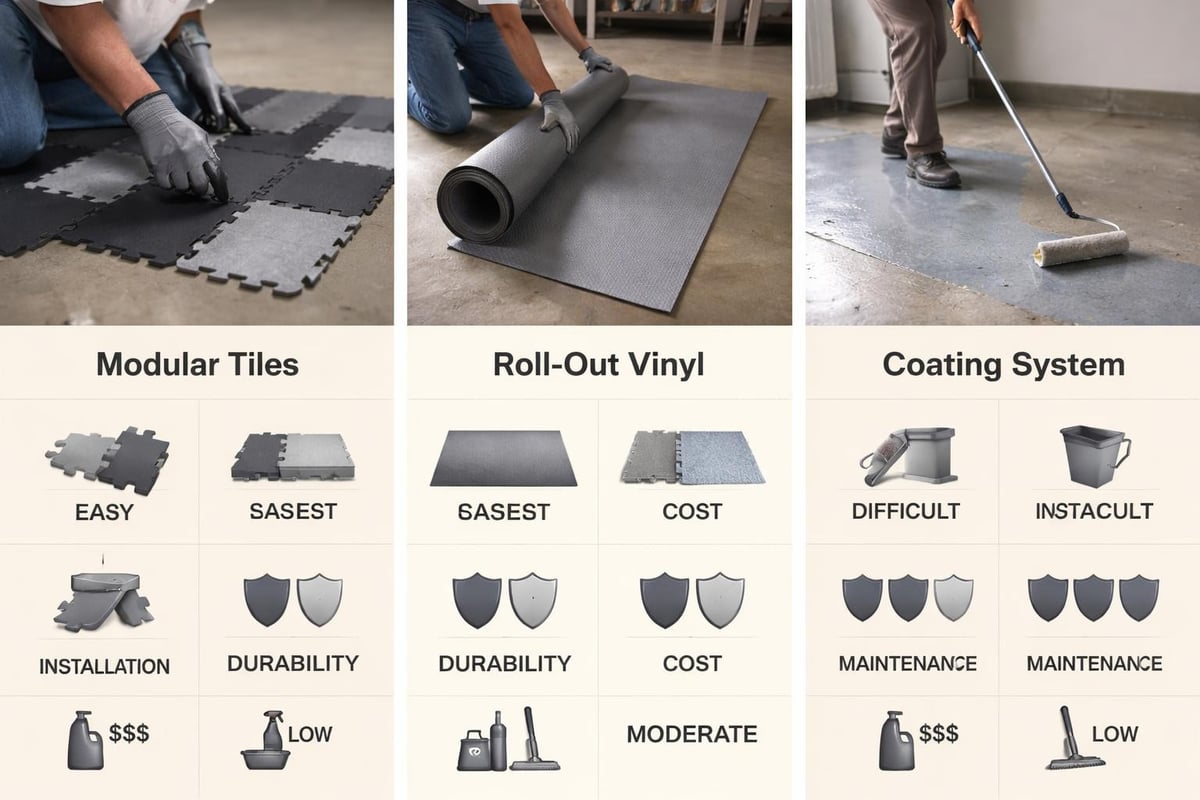
The comparison between coverings and coatings reveals trade-offs in cost, installation time, and performance expectations. Neither solution universally outperforms the other across all criteria.
Performance and Longevity Factors
| Factor | Modular Coverings | Roll-Out Coverings | Coating Systems |
|---|---|---|---|
| Installation Time | 4-8 hours (2-car) | 2-4 hours | 2-3 days with cure time |
| Surface Prep Required | Minimal cleaning | Thorough cleaning | Extensive grinding/etching |
| Lifespan (typical) | 15-25 years | 3-7 years | 5-15 years |
| Repair Difficulty | Individual tile replacement | Complete section replacement | Difficult spot repairs |
| Moisture Tolerance | Excellent (drainage features) | Poor (traps moisture) | Moderate (requires dry substrate) |
Modular systems excel in environments with moisture concerns or uneven concrete. Their elevated structure allows water drainage underneath while protecting stored items from ground moisture.
Selecting Floor Coverings for Garage Floors by Application
Different garage applications demand specific performance characteristics from flooring solutions. Residential garages, commercial workshops, and automotive showrooms present distinct requirements that influence product selection.
Residential Garage Applications
Homeowners typically prioritize aesthetics, ease of maintenance, and reasonable cost when selecting floor coverings for garage floors. Weekend DIY projects, seasonal storage, and occasional vehicle parking represent common usage patterns.
Recommended features for residential installations:
- Stain resistance for household chemicals and automotive fluids
- Easy cleaning with standard household equipment
- Attractive appearance that complements home aesthetics
- DIY-friendly installation without specialized tools
- Moderate pricing that fits renovation budgets
The best-selling collection of modular garage tiles addresses these residential priorities through color variety, proven durability, and straightforward installation procedures that homeowners complete independently.
Commercial and Workshop Environments
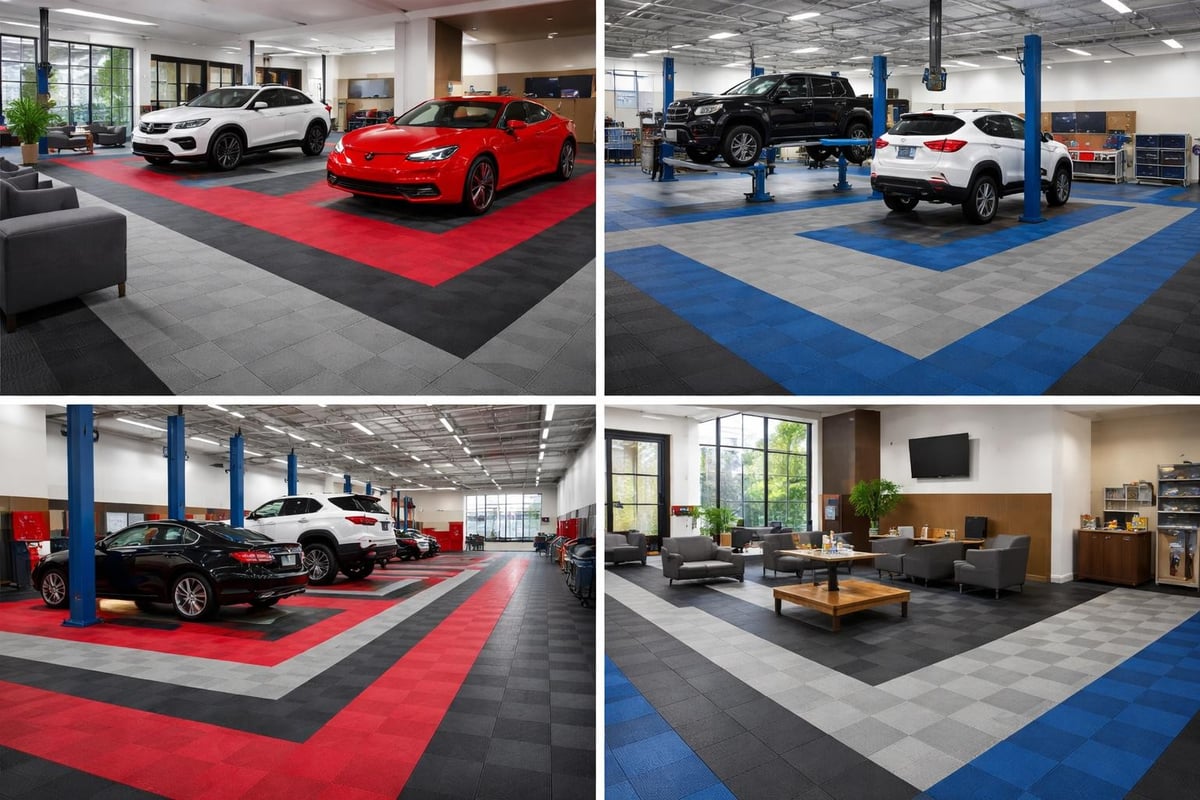
Professional garages, automotive repair facilities, and industrial workshops require heavy-duty floor coverings for garage floors capable of withstanding extreme conditions. Daily vehicle traffic, chemical exposure, and heavy equipment operations accelerate wear on inadequate flooring systems.
Critical specifications for commercial applications include:
- Load ratings exceeding anticipated vehicle weights
- Chemical resistance certified for industrial solvents
- Slip resistance meeting OSHA requirements for workplace safety
- Easy maintenance compatible with commercial cleaning equipment
- Professional appearance that projects quality to customers
The professional installation service ensures commercial installations meet specifications and maintain warranties through proper execution. Expert installers address substrate issues and optimize layout for operational efficiency.
Installation Requirements and DIY Considerations
Successful installation of floor coverings for garage floors depends on proper surface preparation, environmental conditions, and attention to manufacturer specifications. While modular systems accommodate DIY installation, understanding requirements prevents common mistakes.
Surface Preparation Essentials
Concrete substrate condition directly impacts flooring performance regardless of covering type. New concrete requires minimum 28-day cure periods before covering installation. Existing concrete needs thorough evaluation for structural issues.
Pre-installation checklist:
- Moisture testing: Tape plastic sheet to floor overnight and check for condensation
- Surface cleaning: Remove all oils, grease, dirt, and debris
- Crack assessment: Evaluate structural cracks requiring repair versus cosmetic surface cracks
- Level verification: Check for drainage slopes or uneven areas exceeding 1/4 inch per 10 feet
- Temperature confirmation: Ensure garage temperature within product specifications
Significant moisture issues indicate underlying drainage problems that coverings cannot solve. Professional moisture barrier systems may be necessary before installing floor coverings for garage floors in basements or below-grade applications.
Modular Tile Installation Process
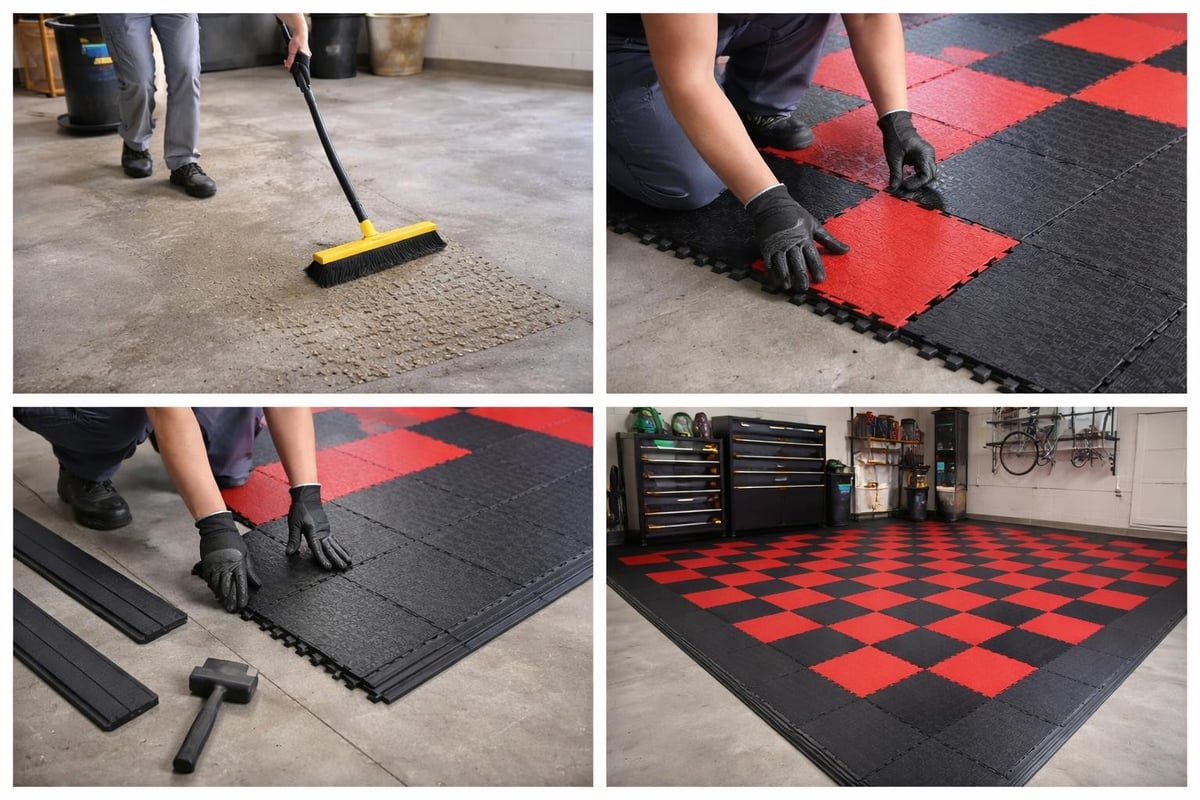
Modular tile systems from Swisstrax feature engineered locking mechanisms that connect without adhesives or special tools. The DIY installation guidance provided by authorized dealers simplifies the process for homeowners.
Installation sequence:
- Start from one corner using chalk lines for alignment
- Connect tiles by aligning tabs and applying downward pressure
- Work across the floor in row-by-row progression
- Trim perimeter tiles as needed using circular saw or jigsaw
- Install edge trim pieces to complete professional appearance
Average installation rates range from 100-200 square feet per hour for experienced installers. First-time DIY installers should budget approximately twice this time for careful alignment and trimming.
Maintenance and Long-Term Care
Proper maintenance extends the lifespan of floor coverings for garage floors and preserves their appearance. Different covering types require specific cleaning approaches and periodic maintenance procedures.
Routine Cleaning Procedures
Modular tile systems benefit from regular sweeping or leaf blowing to remove loose debris. Periodic washing with mild detergent and water restores appearance without damaging tile surfaces. Pressure washing at moderate settings (below 2000 PSI) effectively removes stubborn stains.
Roll-out vinyl products require gentler treatment to prevent edge lifting and surface damage. Damp mopping with pH-neutral cleaners maintains appearance without degrading material. Harsh chemicals or abrasive scrubbing can damage protective coatings on vinyl surfaces.
Seasonal considerations affect maintenance schedules in regions with winter road salt exposure or extreme temperature fluctuations. Spring cleaning after winter addresses accumulated salt residue and debris.
Addressing Damage and Repairs
Modular systems offer significant advantages in repairability compared to other floor coverings for garage floors. Individual damaged tiles disconnect and replace within minutes without specialized tools or matching batch concerns.
Common repair scenarios include:
- Impact damage: Replace affected tiles while surrounding floor remains intact
- Chemical staining: Remove and clean affected tiles individually
- Color updates: Swap tiles to refresh appearance or modify design patterns
- Expansion: Add tiles to extend coverage into adjacent areas
Roll-out products require complete section replacement when damaged, as patching creates visible seams and texture mismatches. This limitation increases long-term ownership costs when repairs become necessary.
Cost Analysis and Return on Investment
Understanding total cost of ownership for floor coverings for garage floors requires analyzing initial investment, installation expenses, and long-term maintenance costs. The lowest purchase price rarely represents the best value over product lifespan.
Initial Investment Comparison
| Product Type | Material Cost (per sq ft) | Installation Cost | Tools Required | Total Cost (400 sq ft garage) |
|---|---|---|---|---|
| Basic Peel-and-Stick | £1.50 - £3.00 | DIY or £200 | Utility knife, roller | £600 - £1,200 |
| Roll-Out Vinyl | £3.00 - £6.00 | DIY or £300 | Utility knife, tape | £1,200 - £2,400 |
| Modular Tiles | £6.00 - £12.00 | DIY or £800 | Rubber mallet, saw | £2,400 - £4,800 |
| Epoxy Coating | £2.50 - £5.00 | Professional £1,200+ | Grinder, mixer, rollers | £2,200 - £3,200 |
Premium modular systems command higher initial investment but deliver superior longevity and performance. The warranty coverage provided by manufacturers like Swisstrax extends protection periods that justify premium pricing.
Long-Term Value Considerations
Calculating annual cost reveals the true value proposition of floor coverings for garage floors. Dividing total ownership cost by expected lifespan yields per-year expenses that often favor higher-quality initial investments.
20-year ownership scenario (400 sq ft garage):
- Basic peel-and-stick: £3,600 (6 replacements at £600 each) = £180/year
- Roll-out vinyl: £4,800 (3 replacements at £1,600 each) = £240/year
- Modular tiles: £3,200 (1 installation, no replacement) = £160/year
- Epoxy coating: £4,400 (2 recoating cycles at £2,200 each) = £220/year
Professional installation adds initial cost but ensures proper execution that maximizes product lifespan. DIY installations that ignore substrate preparation or environmental requirements often fail prematurely.
Specialized Applications and Advanced Features
Modern floor coverings for garage floors incorporate advanced features that extend functionality beyond basic concrete protection. Specialized applications in automotive showrooms, home gyms, and commercial spaces demand enhanced performance characteristics.
Logo Integration and Custom Graphics
Custom branding through floor graphics creates distinctive environments in commercial settings. The GraphTicTrax custom logo system enables full-color graphics printed on specialized tiles that integrate seamlessly with standard modular flooring.
Applications include:
- Automotive dealership branding in showroom floors
- Corporate logos in office garage areas
- Directional markings and safety zones in workshops
- Custom designs for residential enthusiast garages
- Team logos in home gym installations
Digital printing technology reproduces complex graphics at high resolution without compromising tile structural integrity or performance characteristics.
Multi-Purpose Space Optimization
Garage spaces increasingly serve dual purposes as workshops, gyms, entertainment areas, or home offices. Floor coverings for garage floors that accommodate these diverse uses provide value beyond simple concrete protection.
Feature considerations for multi-purpose spaces:
- Acoustic properties: Sound dampening for entertainment or music areas
- Thermal insulation: Comfort underfoot in climate-controlled spaces
- Texture variety: Smooth tiles for office furniture versus textured for vehicle areas
- Color zoning: Visual separation of functional areas through color coordination
The gallery of completed installations demonstrates how modular systems adapt to diverse applications while maintaining cohesive design aesthetics throughout mixed-use spaces.
Environmental and Health Considerations
Selecting floor coverings for garage floors involves evaluating environmental impact, indoor air quality effects, and sustainable manufacturing practices. Health-conscious property owners prioritize products that minimize chemical exposure and environmental footprint.
VOC Emissions and Air Quality
Traditional epoxy coatings release volatile organic compounds during application and curing periods. These emissions create health concerns and require extended ventilation periods before occupancy.
Modular tile systems and roll-out vinyl products eliminate VOC concerns through manufacturing processes that complete off-gassing before installation. Immediate use after installation accommodates tight project timelines without health risks.
Indoor air quality advantages:
- No chemical mixing or application fumes
- Immediate occupancy after installation completion
- No curing periods requiring garage evacuation
- Reduced exposure for household members with chemical sensitivities
Sustainability and Recycling
Material selection impacts environmental sustainability throughout product lifecycle. Polypropylene tiles like those in the accessories collection feature recyclable composition that reduces landfill burden at end of service life.
Manufacturing processes utilizing recycled content and renewable energy sources minimize carbon footprint. Transportation efficiency through interlocking design reduces packaging waste compared to liquid coating products requiring multiple containers and mixing equipment.
Reusability represents another sustainability advantage of modular floor coverings for garage floors. Tiles relocate with property owners or repurpose in different spaces rather than becoming demolition waste during renovations.
Transforming garage spaces through appropriate floor coverings delivers functional benefits and aesthetic improvements that enhance property value. Whether prioritizing durability for commercial applications or design flexibility for residential projects, selecting the right flooring system requires careful evaluation of performance requirements and long-term ownership costs. Elite Modular Flooring specializes in Swisstrax modular garage floor tiles that combine superior engineering with design versatility, backed by professional installation services and comprehensive warranty protection. Contact their team to explore how premium modular flooring solutions can transform your garage into a professional-grade environment.

