

Cool Garage Flooring: Transform Your Space in 2026

Your garage is more than just a place to park vehicles or store seasonal items. It's a workspace, a gym, a showroom, and sometimes the hub of weekend projects. The flooring you choose sets the foundation for how functional and visually appealing this space becomes. Cool garage flooring options available in 2026 offer unprecedented combinations of durability, aesthetics, and easy installation that transform garages from drab concrete slabs into polished, professional-looking environments. Whether you're looking to create a car enthusiast's dream space, a home gym, or simply upgrade from cracked concrete, understanding modern flooring solutions helps you make the right investment for your specific needs.
Why Traditional Garage Floors Fall Short
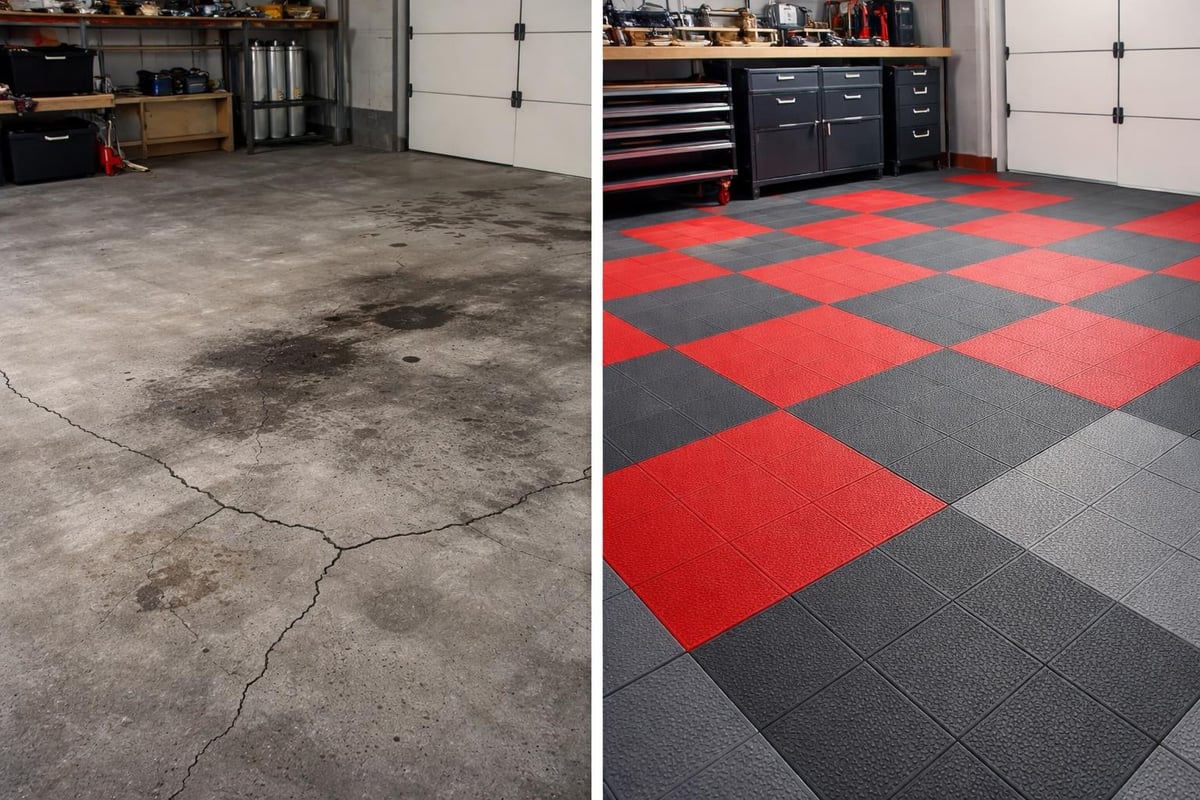
Bare concrete has dominated garage construction for decades, but it comes with significant drawbacks that become more apparent over time. Concrete absorbs oil, chemicals, and moisture, leading to permanent staining that diminishes appearance and resale value.
Temperature fluctuations cause concrete to expand and contract, creating cracks that worsen each year. These cracks collect dirt and debris while allowing moisture to seep through, potentially damaging stored items and creating unsafe walking conditions during winter months.
The Hidden Costs of Concrete
Beyond aesthetics, concrete floors present practical challenges that impact daily use:
- Dust generation: Concrete continuously releases fine particles that settle on vehicles and stored items
- Hard surface: Dropped tools or parts often sustain damage from impact with unforgiving concrete
- Cold retention: Concrete stays cold year-round, making garages uncomfortable during winter
- Maintenance difficulty: Oil stains and tire marks become permanent without expensive treatments
The best garage flooring options address these inherent concrete problems while adding functionality that transforms how you use the space. Modern solutions provide superior performance without requiring professional concrete finishing or lengthy curing times.
Modular Tile Systems: The Cool Garage Flooring Revolution
Interlocking modular tiles represent the most significant advancement in cool garage flooring technology over the past decade. These engineered systems snap together without adhesives, creating a floating floor that protects the concrete underneath while delivering exceptional performance.
Swisstrax pioneered this technology, developing proprietary designs that maximize strength while incorporating drainage channels and airflow features. The modular approach offers advantages that traditional coatings and permanent installations cannot match.
Engineering Behind Performance
Modern modular tiles utilize advanced polypropylene copolymer formulations that withstand extreme temperatures from -40°F to 140°F without becoming brittle or soft. The interlocking mechanism distributes weight across multiple tiles, preventing individual tile failure even under heavy vehicle loads.
Key Performance Characteristics:
| Feature | Benefit | Real-World Impact |
|---|---|---|
| Open-grid design | Airflow and drainage | Wet shoes and snow melt don't puddle |
| UV stabilization | Color retention | No fading from sunlight exposure |
| Chemical resistance | Easy cleaning | Motor oil, antifreeze wipe clean |
| Modular construction | Damage repair | Replace individual tiles, not entire floor |
The Ribtrax Pro system exemplifies this engineering approach, featuring a raised rib pattern that enhances traction while creating an attractive professional appearance. Installation requires only a rubber mallet and measuring tape, making it accessible for DIY enthusiasts while delivering results that rival professional installations.
Design Flexibility That Matches Your Vision
Cool garage flooring extends beyond functionality into creative expression. The color palette available in 2026 includes over 20 standard options plus custom possibilities, enabling designs that reflect personal style or complement vehicle collections.
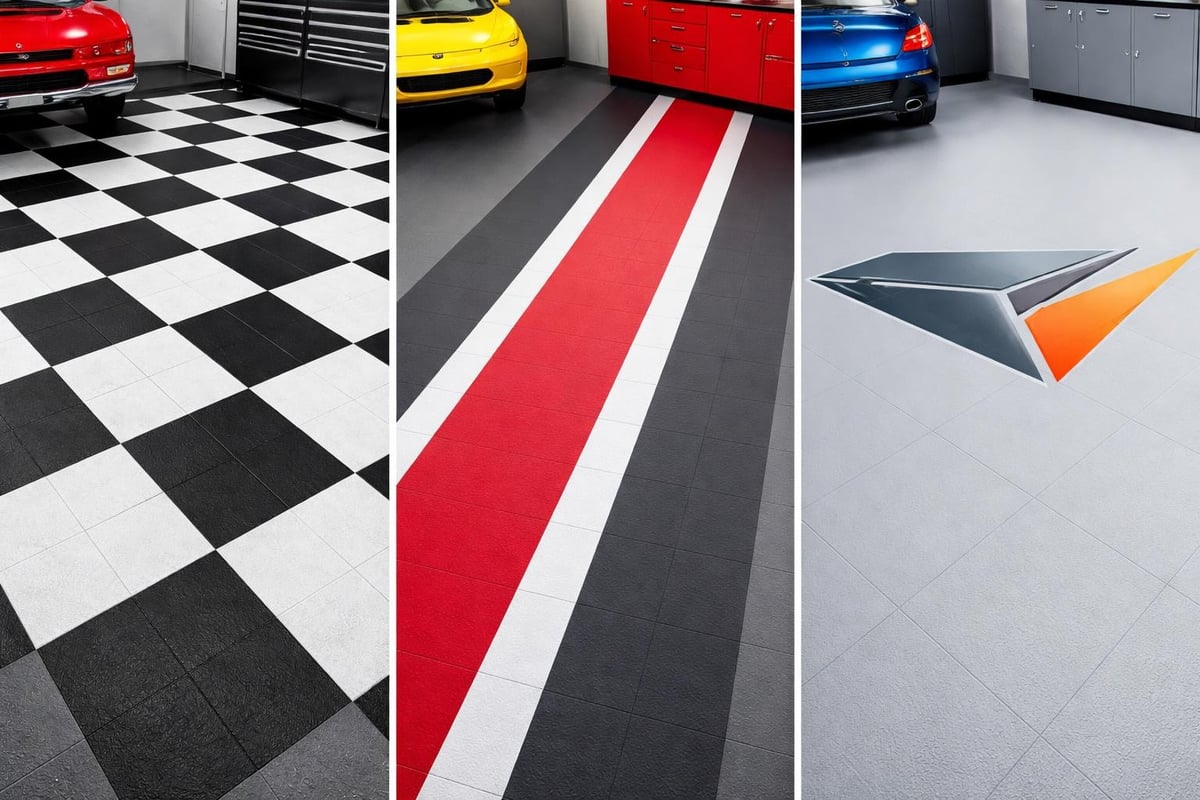
Pattern creation transforms garages into showrooms. Checkerboard layouts remain popular for classic automotive themes, while racing stripes, border accents, and custom logos add personality that makes the space uniquely yours.
Popular Design Approaches
Contemporary Minimalist: Solid colors like pearl silver, black, or graphite gray create clean, modern aesthetics that highlight vehicles and equipment rather than competing for attention.
High-Contrast Sport: Alternating black and bright colors (red, blue, yellow) evoke racing heritage while hiding tire marks and maintaining visual interest across large floor areas.
Custom Branding: The GraphticTrax custom logo system integrates company branding, family crests, or favorite sports teams directly into the floor surface through precision-cut tile arrangements.
Designers working on garage renovations in 2026 increasingly specify modular systems for their reversibility and adaptability. Unlike epoxy coatings that require grinding for removal, tiles unsnap and reinstall in new configurations or different locations entirely.
Installation Simplified: From Planning to Completion
The installation process for cool garage flooring has evolved to be remarkably straightforward, even for those with limited DIY experience. Proper planning ensures optimal results while avoiding common pitfalls that compromise appearance or performance.
Pre-Installation Preparation
Start with a clean, dry concrete surface free from major debris. Small cracks and imperfections don't require repair since the floating floor system bridges these irregularities. Sweep thoroughly and ensure the floor is dry, as moisture trapped under tiles can create temporary expansion.
Measure the garage carefully, accounting for any irregularular corners or protrusions. Most manufacturers provide online design tools that calculate exact tile quantities while visualizing pattern layouts before purchase.
Essential Installation Steps:
- Layout planning: Start from the most visible corner, typically the garage door entrance
- First row placement: Ensure the initial row runs perfectly straight as it guides the entire installation
- Tile connection: Align interlocking features at 45-degree angle, then press down firmly until they click
- Cutting tiles: Use a circular saw or jigsaw for edges and obstacles like poles or drains
- Border installation: Add finishing edges that create smooth transitions and prevent tile lift
The Swisstrax installation guide provides video demonstrations showing proper techniques for achieving professional results. Most single-car garages install in 2-3 hours, while larger two or three-car spaces typically complete within a day.
Professional vs. DIY Installation
While modular tiles enable confident DIY installation, some homeowners prefer professional services for complex layouts or time constraints. Professional installers bring experience with pattern alignment, precise cutting around irregular features, and efficient completion timelines.
Consider professional installation when:
- The garage has multiple drains, posts, or irregular angles
- Custom logo or intricate pattern designs require precise tile placement
- Time constraints make weekend DIY projects impractical
- You want warranty protection that some manufacturers extend for professional installations
Comparing Cool Garage Flooring Options
Understanding how different flooring categories perform helps narrow choices based on priorities like budget, durability requirements, and aesthetic preferences. The garage flooring market in 2026 offers more choices than ever, but not all deliver equivalent value.
Material Comparison Analysis
| Flooring Type | Lifespan | Installation Time | Durability | Maintenance | Cost Range |
|---|---|---|---|---|---|
| Modular Tiles | 20+ years | 1 day DIY | Excellent | Minimal | $$$ |
| Epoxy Coating | 5-10 years | 3-5 days | Good | Moderate | $$ |
| Roll-Out Mats | 3-7 years | 30 minutes | Fair | High | $ |
| Concrete Stain | 10-15 years | 2-3 days | Good | Low | $$ |
| Polished Concrete | 15+ years | 5-7 days | Excellent | Low | $$$$ |
Bob Vila's comprehensive guide explores these categories in detail, examining trade-offs between initial investment and long-term performance. Cool garage flooring options increasingly emphasize reversibility and adaptability as homeowners change vehicle collections or repurpose spaces over time.
Why Modular Systems Lead the Market
Modular tiles dominate premium garage installations because they solve problems that other options cannot address. The floating installation protects underlying concrete while remaining completely removable if you move or want to change the design.
Unlike epoxy coatings that require perfect concrete conditions and multiple days of curing, tiles install over existing surfaces regardless of minor imperfections. This flexibility makes them ideal for both new construction and renovation projects.
Temperature stability gives modular systems advantages over roll-out products that expand and contract with seasonal changes. High-quality tiles maintain dimensional stability across temperature extremes common in garage environments.
Maintenance and Long-Term Performance
Cool garage flooring should minimize maintenance while maximizing durability. The right system requires only occasional cleaning to maintain showroom appearance for decades.
Routine Care Protocols
Daily maintenance involves nothing more than sweeping or using a dry dust mop to remove loose dirt and debris. The open-grid design of quality modular tiles prevents dirt accumulation that would require frequent deep cleaning.
Weekly Maintenance: Spot clean any spills or stains with mild detergent and water. The chemical-resistant surface allows most automotive fluids to wipe away without leaving permanent marks.
Monthly Deep Cleaning:
- Sweep or vacuum the entire floor thoroughly
- Mix mild detergent with warm water in a bucket
- Mop or use a soft-bristle brush for stubborn spots
- Rinse with clean water and allow to air dry
Power washing represents an effective annual maintenance option for heavily used garages. The modular design allows water to flow through drainage channels rather than pooling on the surface.
Damage Prevention and Repair
Even the most durable cool garage flooring can sustain damage from unusual circumstances. The advantage of modular systems lies in simple repair that doesn't require refinishing entire sections.
If a tile cracks from extreme impact, unsnap the surrounding tiles, remove the damaged piece, and snap a replacement into position. This repair capability means your floor maintains perfect appearance indefinitely, regardless of accidents or wear patterns.
Store several extra tiles in your original color selection for future repairs. While modern tiles feature excellent color stability, having original production run tiles ensures perfect color matching years later.

Specialty Applications Beyond Vehicle Storage
The versatility of cool garage flooring extends its applications far beyond traditional automotive storage. Homeowners and businesses increasingly recognize these systems as ideal solutions for diverse environments requiring durability and professional appearance.
Home Gym Integration
Fitness enthusiasts transform garages into private gyms using modular flooring systems designed for heavy equipment and high-impact activities. The cushioned surface reduces joint stress during exercises while providing stability for weight racks and cardio equipment.
VinylTrax Pro specifically targets gym applications with a smooth, non-perforated surface ideal for rolling equipment and floor exercises. The closed-top design prevents small items from falling through while maintaining the durability and easy installation of open-grid systems.
Workshop and Hobby Spaces
Craftsmen and hobbyists appreciate flooring that withstands dropped tools, chemical spills, and rolling equipment while providing comfortable standing surfaces for extended work sessions. The anti-fatigue properties of quality modular tiles reduce leg and back strain during long projects.
Workshop applications benefit from bright color options that enhance lighting effectiveness, making detailed work easier on the eyes. Lighter colors reflect overhead lighting more effectively than dark concrete, reducing shadows and improving visibility.
Commercial Showroom Excellence
Auto dealerships, motorcycle shops, and retail environments use premium modular flooring to create distinctive brand experiences. The gallery of installations demonstrates how businesses leverage color and pattern to reinforce brand identity while creating memorable customer environments.
Commercial applications demand higher durability standards than residential use. Premium tiles engineered for showroom traffic maintain appearance under constant foot traffic and rolling displays while supporting the weight of multiple vehicles in compact areas.
Cost Considerations and Value Analysis
Investing in cool garage flooring requires understanding both upfront costs and long-term value. The most expensive option isn't always the best choice, while the cheapest rarely delivers satisfactory performance over time.
Initial Investment Breakdown
Modular tile systems typically range from $4 to $9 per square foot depending on tile style, color options, and quantity purchased. A standard 400-square-foot two-car garage requires approximately $1,600 to $3,600 in materials.
Additional costs include:
- Border/edge pieces: $15-25 per linear foot
- Installation tools: $50-100 for DIY (reusable for future projects)
- Professional installation: $2-4 per square foot additional
- Floor preparation: $200-500 if significant cleaning or repair needed
Return on Investment Factors
Quality garage flooring increases home value while enhancing daily enjoyment of the space. Real estate professionals note that finished garages appeal strongly to buyers, often returning 60-80% of installation costs in increased home value.
Beyond resale considerations, the functional improvements justify investment through:
- Protected vehicle finishes from concrete dust and moisture
- Reduced heating costs from insulating properties
- Enhanced safety from slip-resistant surfaces
- Increased usable space through improved aesthetics encouraging better organization
The modular nature of premium tiles adds unique value through portability. If you move, uninstall the floor and take it with you, reinstalling in your new garage. This removability doesn't apply to permanent coatings or polished concrete treatments.
Color Psychology and Space Perception
Color selection for cool garage flooring influences how the space feels and functions beyond mere aesthetics. Understanding color psychology helps create environments aligned with intended uses.
Light vs. Dark Color Strategies
Light Colors (pearl, white, silver gray):
- Maximize brightness by reflecting overhead lighting
- Create perception of larger space in compact garages
- Show dirt more readily, encouraging frequent cleaning
- Complement modern architectural styles
Dark Colors (black, graphite, midnight blue):
- Hide tire marks and minor staining effectively
- Create dramatic contrast with bright vehicles
- Absorb rather than reflect light, requiring stronger lighting
- Evoke performance and luxury automotive themes
Mid-Tone Colors (slate, bronze, terracotta):
- Balance between showing dirt and maintaining clean appearance
- Complement traditional home architecture
- Provide neutral backgrounds for varied vehicle colors
- Reduce eye strain during extended workshop sessions
Color combination strategies enhance visual interest while serving practical purposes. Border contrasts define space boundaries and direct traffic flow, while accent stripes add movement and energy to large floor areas.
Future Trends in Garage Flooring Technology
The garage flooring industry continues innovating with materials and features that expand possibilities for cool garage flooring applications. Emerging trends for 2026 and beyond focus on sustainability, smart integration, and enhanced customization.
Sustainable Material Development
Manufacturers increasingly emphasize recycled content and recyclability in tile production. New formulations incorporate post-consumer plastics without compromising performance, appealing to environmentally conscious consumers who want durable products with reduced environmental impact.
Life cycle analysis demonstrates that long-lasting modular systems generate less waste than shorter-lived alternatives requiring replacement every few years. The ability to uninstall and reinstall tiles extends practical lifespan beyond typical flooring options.
Smart Floor Integration
Prototype systems under development integrate LED lighting elements directly into tile structures, creating illuminated patterns and safety lighting without separate electrical installation. Pressure-sensitive tiles may soon trigger lighting or ventilation systems when vehicles enter or exit.
These innovations remain specialized applications, but they demonstrate how cool garage flooring continues evolving beyond simple surface protection toward integrated environment management.
Enhanced Customization Options
Digital printing technology enables increasingly sophisticated custom designs including photorealistic images, complex logos, and personalized patterns. While traditional tile colors rely on pigmented materials throughout, new surface treatment techniques may expand design possibilities while maintaining durability standards.
The Home Depot's garage flooring guide explores how customization options help homeowners express personality while solving practical flooring challenges. As manufacturing technology advances, expect even greater design freedom in coming years.
Selecting the Right System for Your Needs
Choosing among cool garage flooring options requires evaluating your specific priorities, budget, and intended uses. A systematic approach ensures the final selection delivers satisfaction for years to come.
Decision Framework
Step 1 - Define Primary Use: Determine whether the garage serves primarily for vehicle storage, workspace, gym, or multi-purpose use. Different applications favor different tile characteristics.
Step 2 - Assess Environmental Factors: Consider temperature extremes, moisture exposure, and chemical contact your floor will encounter. Harsh environments require premium materials, while climate-controlled garages offer more flexibility.
Step 3 - Establish Budget Parameters: Decide your comfortable investment range, remembering that quality systems provide better long-term value than budget alternatives requiring frequent replacement.
Step 4 - Evaluate Installation Preferences: Determine whether you prefer DIY installation or professional services based on available time, skill level, and project complexity.
Step 5 - Select Aesthetic Direction: Choose colors and patterns that complement your home's architecture and personal style while serving practical purposes like hiding dirt or enhancing lighting.
Working with Specialists
Consulting with authorized dealers provides access to expertise that ensures optimal product selection. Specialists understand nuanced differences between tile systems and can recommend solutions matched to specific requirements.
Questions to ask during consultation:
- Which tile pattern best suits my climate and usage patterns?
- How do warranty terms differ between product lines?
- What edge treatments work best for my garage configuration?
- Can I see installed examples in similar applications?
- What maintenance products do you recommend for long-term care?
Professional guidance helps avoid costly mistakes while identifying opportunities for enhanced functionality you might not have considered independently.
Installation Best Practices and Expert Tips
Achieving professional results with cool garage flooring requires attention to details that separate good installations from great ones. These proven techniques help DIY installers avoid common pitfalls.
Advanced Layout Strategies
Center-Out Method: For garages where vehicles park in the center, start tile installation from the middle and work toward walls. This ensures any cut tiles at perimeters are equal width on both sides, creating balanced appearance.
Dry Layout First: Before snapping tiles together permanently, lay out several rows without connecting them. This preview reveals pattern flow and identifies potential issues before they require extensive rework.
Expansion Gap Management: While modular tiles handle temperature changes well, leaving 1/4-inch expansion gaps at walls prevents potential buckling in extreme temperature swings. Border pieces conceal these gaps while allowing necessary movement.
Cutting Techniques for Professional Edges
Clean cuts around obstacles, door frames, and irregular walls distinguish professional installations from amateur attempts. Use these approaches for different cutting scenarios:
- Straight cuts: Circular saw with fine-tooth blade creates clean, fast cuts for border tiles
- Curved cuts: Jigsaw with plastic-cutting blade navigates around posts and drains
- Notches and corners: Combination of jigsaw and utility knife handles complex shapes
- Final fit adjustments: Belt sander smooths cut edges for perfect fit against walls
Creating cardboard templates for complex cuts prevents wasting tiles on measurement errors. Trace the required shape, refine the template, then transfer to the tile for cutting.
Troubleshooting Common Installation Challenges
Uneven Concrete: Significant dips or high spots may prevent tiles from laying flat. Fill depressions with self-leveling concrete or use shims under affected tiles to maintain level surface.
Door Clearance: Standard garage doors may not clear thicker tile systems. Measure carefully and consider removing bottom weather stripping or adjusting door stop positions if needed.
Temperature During Installation: Install tiles at moderate temperatures (60-80°F) when possible. Extreme cold makes tiles brittle and difficult to snap together, while excessive heat can cause temporary expansion.
Tile Direction Consistency: Tiles often have subtle directional grain or pattern. Maintain consistent orientation throughout installation for uniform appearance, marking the underside of each tile with arrows during layout if needed.
Cool garage flooring transforms utilitarian spaces into professional environments that enhance property value while improving daily functionality. The combination of durability, design flexibility, and straightforward installation makes modular tile systems the preferred choice for discerning homeowners and businesses in 2026. Whether you're protecting a classic car collection, creating a home gym, or simply upgrading from cracked concrete, the right flooring system provides decades of reliable performance with minimal maintenance. Elite Modular Flooring specializes in Swisstrax modular systems with expert guidance and professional installation services that ensure your garage flooring project exceeds expectations from planning through completion.

